What Is a Pharmacist Consultation? The Short Answer
A pharmacist consultation is a conversation with a licensed pharmacist about your medicines and how to use them safely. During the consultation, the pharmacist may review your prescription directions, explain what a medicine is for, discuss possible side effects and interactions, answer your questions, and identify concerns that need follow-up with your prescriber. The discussion can be brief or more detailed, depending on your needs.
You can ask for guidance when starting a medication, picking up a refill, considering an over-the-counter product, or noticing a problem with your treatment.
Key Takeaways
- A pharmacy consultation helps you understand how to take medications safely and what to watch for.
- It can cover prescriptions, over-the-counter medicines, vitamins, and supplements.
- Bring an up-to-date medication list and mention allergies, side effects, and any trouble following directions.
- Pharmacists can clarify medication concerns and coordinate with prescribers when needed; they do not replace a medical diagnosis or emergency care.
- Pharmacist consultations at ABC Drugs are free of charge. Other pharmacies and specialized services may have different policies.
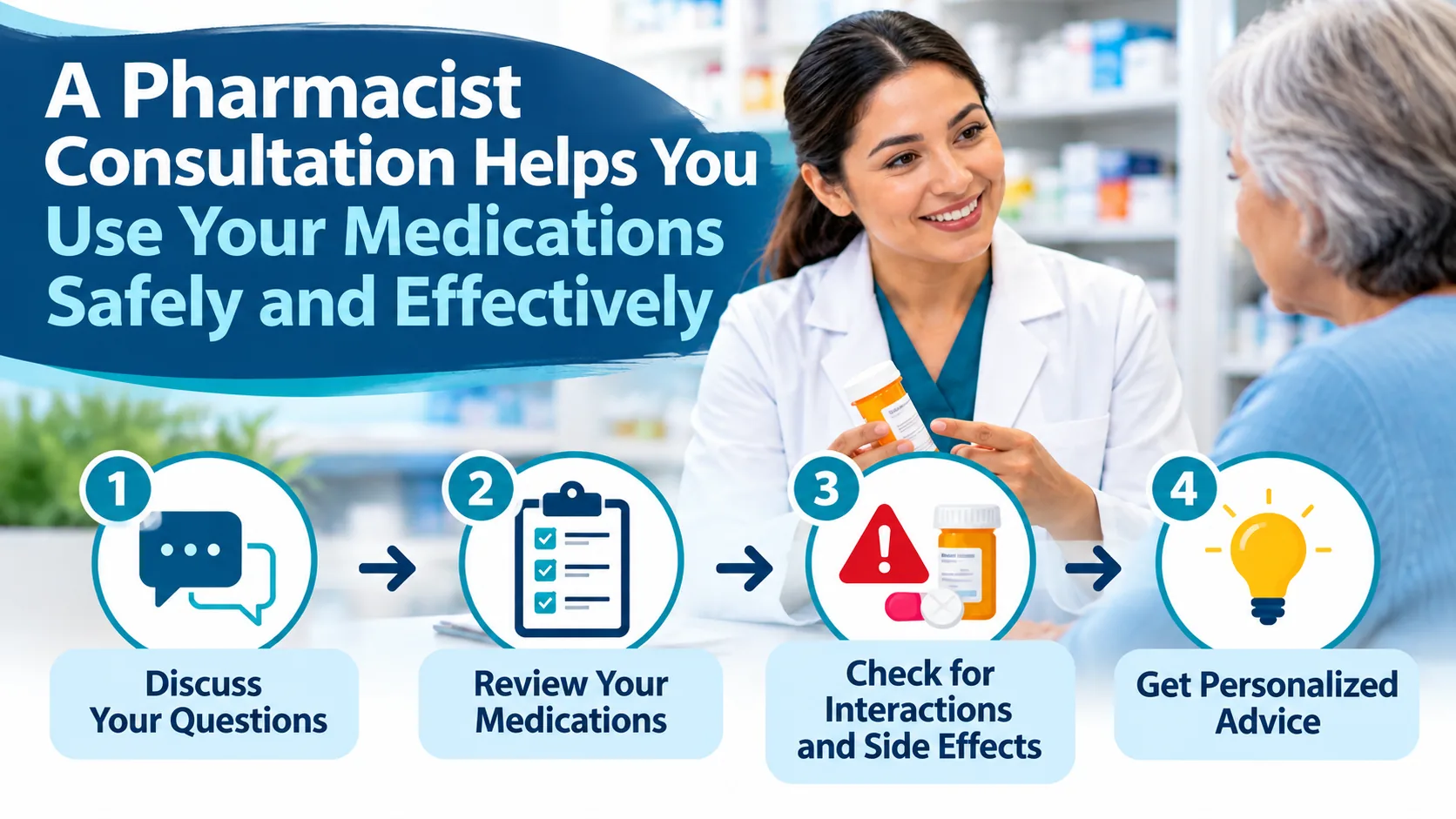
What Happens During a Pharmacy Consultation?
Although the details vary, a pharmacist consultation usually follows a simple conversation: the pharmacist learns about your medication concern, reviews relevant information, explains what matters, and helps you understand appropriate next steps.
1. You explain your question or concern
You might ask how to take a new medicine, whether it can be taken with something else, or what a warning on the label means. Tell the pharmacist what you are actually taking, including nonprescription products and supplements.
2. The pharmacist reviews relevant medication information
The pharmacist may check the medication name, strength, instructions, possible interactions, allergies, and information available in your pharmacy record. If information is missing or a prescription needs clarification, the pharmacist may need to contact the prescriber.
3. You receive an explanation and next steps
The pharmacist can explain directions in plain language, discuss precautions and possible side effects, and help identify questions for your healthcare provider. Some concerns can be answered during the conversation; others require prescriber follow-up or medical evaluation.
Before the conversation ends: explain the instructions back in your own words, ask what to do if you have further questions, and confirm whether the pharmacist or prescriber needs to follow up. You can write down the agreed next step so it is easier to remember.
What Can You Discuss During a Pharmacist Consultation?
A consultation can address a question about one medication or how several medicines fit into your routine. You might discuss prescription directions, a warning on a label, a recent change, or whether a product you use could affect another medicine.
For example, if you receive a refill with a different-looking tablet, you can bring the package to the pharmacist and ask them to confirm what was dispensed and explain any differences. Do not assume that appearance alone establishes whether a medicine is correct.
For more detailed guidance, see How to Read a Prescription Label. Questions about side effects or combining prescription and nonprescription products may require medication-specific assessment rather than a general answer.
How Should You Prepare for a Pharmacist Consultation?
You do not need to know medical terminology. A few details can help make the discussion more useful:
- Bring or share a current list of prescriptions, over-the-counter products, vitamins, and supplements—including products from other pharmacies.
- Tell the pharmacist about medication allergies, previous reactions, and new or concerning symptoms.
- Have the prescription container or a clear photo of its label available when asking about a specific medicine.
- Write down your two or three most important questions.
- Mention practical difficulties, such as trouble swallowing pills, reading labels, remembering doses, or paying for medication.
If you take several medicines, our guide to keeping track of multiple medications can help you prepare an accurate list.
When Might You Need Pharmacist Advice?
Patients often ask questions when starting a prescription, receiving changed directions, noticing an unexpected difference in a refill, or considering an over-the-counter product. The right next step depends on the specific medicine and concern.
This article focuses on what a consultation involves. If you are unsure when to seek medication advice—including questions about new prescriptions, possible side effects, or medication changes—read our guide: When Should You Talk to a Pharmacist About Your Medication? It explains when to ask for guidance and when more urgent medical attention may be needed.
What Can a Pharmacist Do—and What Are the Limits?
Pharmacists are medication experts who can explain prescribed therapies, identify potential medication-related concerns, recommend appropriate questions for your prescriber, and help patients understand safer use of prescription and nonprescription products.
A community pharmacist consultation is not the same as a physician visit. A pharmacist generally cannot independently diagnose a medical condition or change a prescriber's treatment plan simply because a patient requests it. Specific pharmacist authorities depend on New York law, professional scope, and the service being provided. A pharmacist may refer you to your prescriber or emergency care when the question goes beyond pharmacy counseling.
Is a Pharmacist Consultation the Same as Medication Counseling or a Medication Review?
These terms overlap, but they do not always describe identical services.
- Medication counseling often focuses on one prescription: how to use it, precautions, side effects, and questions about the directions.
- Pharmacist consultation is a broader everyday term for discussing medication-related questions with a pharmacist.
- Medication review may involve a more structured look at multiple medications, including potential duplication, interactions, and practical difficulties with the regimen.
The exact scope of a consultation or review depends on the pharmacy, the patient's needs, and the service offered.
Are Pharmacist Consultations Free at ABC Drugs?
Yes. ABC Drugs offers pharmacist consultations at no charge. You can ask our pharmacy team questions about your prescriptions, medication directions, possible interactions, and other medication-related concerns.
Consultation policies may differ at other pharmacies. The fact that ABC Drugs offers free pharmacist consultations does not mean that prescriptions, medicines, or every separate specialized service are free.
For information about our service, visit the ABC Drugs Pharmacist Consultation page.
Pharmacist Consultation at ABC Drugs in Harlem, NYC
ABC Drugs is located at 2095 Madison Avenue, New York, NY 10037. Our pharmacists can help patients understand prescription directions, discuss medication questions, and identify when follow-up with a prescriber may be appropriate. Our pharmacist consultations are free of charge.
Visit our Pharmacist Consultation service page for information about this service. For questions about prescription insurance issues, see Prescription Insurance Assistance.
Frequently Asked Questions About Pharmacist Consultations
What happens during a pharmacist consultation?
You describe your question, the pharmacist reviews relevant medication information, and you discuss explanations and next steps. The pharmacist may contact your prescriber when clarification is needed.
How should I prepare for a consultation?
Bring an up-to-date medication list, relevant prescription labels, allergy information, and the questions you want answered. Include over-the-counter products and supplements, even if you buy them elsewhere.
Is a consultation the same as a medication review?
Not always. A consultation may focus on one question; a structured medication review may examine several medicines and potential regimen problems. The scope depends on the service and the patient's needs.
Can a pharmacist change a prescription?
Pharmacists work within applicable professional and legal authority. Changes that require the prescriber's authorization must be coordinated with the prescriber.
Is a pharmacist consultation free at ABC Drugs?
Yes. ABC Drugs offers pharmacist consultations at no charge. Medication costs and separate services are different matters.
Can I ask a pharmacist a question without picking up a prescription?
You can contact ABC Drugs with a medication question and ask to speak with a pharmacist. A pharmacist may need relevant details or may recommend further medical evaluation depending on the concern.
Sources & References
- U.S. Food and Drug Administration (FDA): Tips for Talking With Your Pharmacist.
- FDA: Pharmacists Help You Use Medicines Safely.
- National Library of Medicine, MedlinePlus: Taking Medicines: What to Ask Your Provider.
- FDA: Drug Interactions: What You Should Know.
Medical disclaimer: This article is for general educational and informational purposes only and is not a substitute for personalized medical advice. Talk with your pharmacist or healthcare provider about questions concerning your medications or health conditions.