Keeping track of multiple medications starts with an up-to-date medication list and a clear schedule that follows your prescription instructions.
Your system might include a written schedule, phone reminders, a dose checklist, a pill organizer, or pharmacy-prepared packaging. Choose tools that fit your routine and update them whenever your medications or instructions change.
Your pharmacist can help clarify directions and explain which organization options may be appropriate for your medications.
Key Takeaways
- Keep one current list of your prescription medicines, over-the-counter medicines, vitamins, and supplements.
- Record each medication’s name, strength, dose, and instructions.
- Use a schedule and reminders that follow your prescribed directions.
- Ask your pharmacist before moving medications into an organizer or other packaging.
- Track refill needs and update your system when prescriptions change.
- Share your current medication list with your healthcare team and caregivers when appropriate.
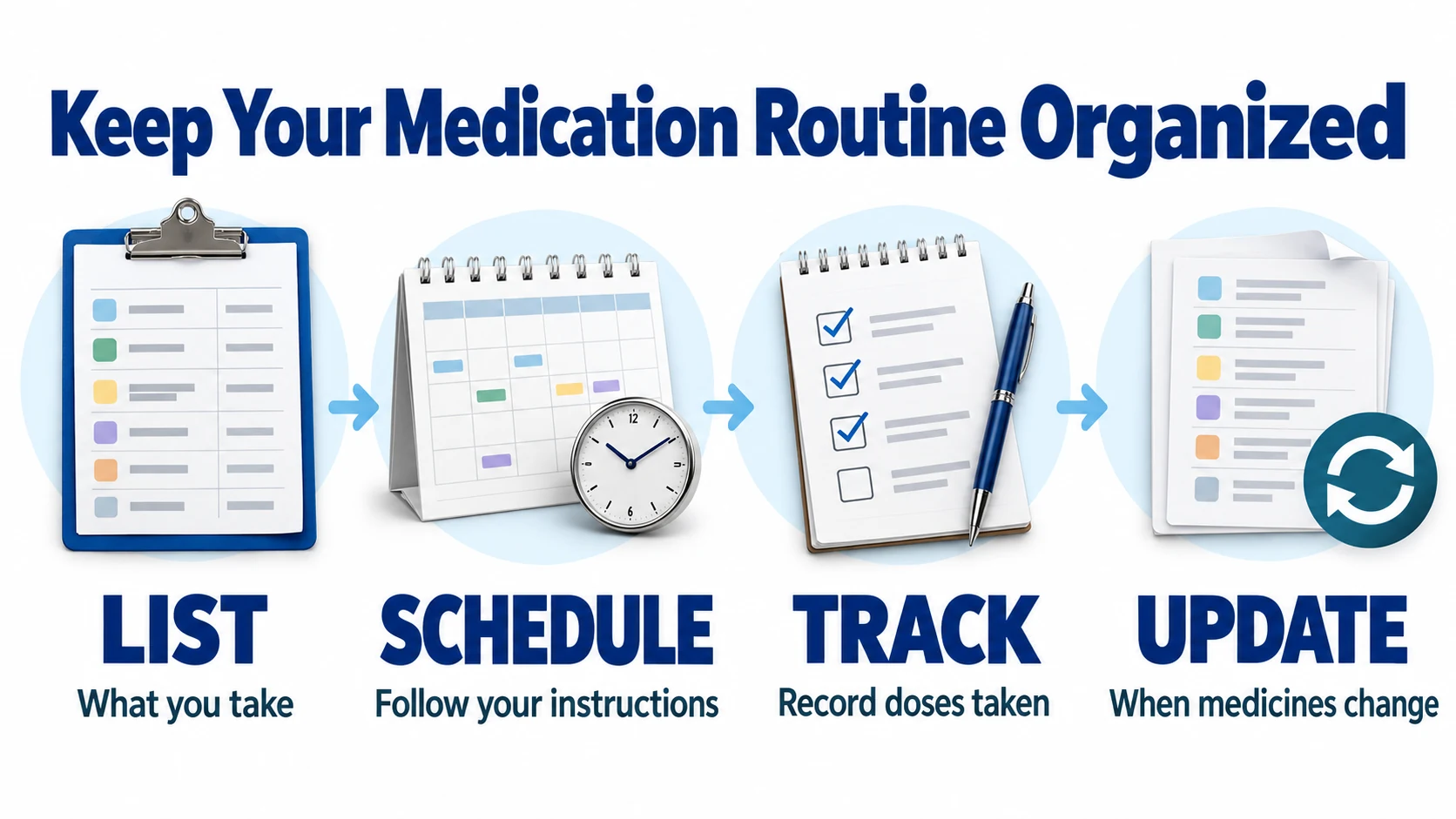
Start With an Up-to-Date Medication List
A medication list gives you one place to record what you take. Include medicines you use regularly and those you take only occasionally.
For each medication, record:
- Its name and strength
- How much you take
- When and how you take it
- What you take it for, if known
- Any special instructions you have been given
Include prescription medicines, over-the-counter products, vitamins, herbal products, and other supplements. Keep allergies and an emergency contact with the list.
Paper, a phone note, an app, or a printed form can work. Choose a format you can keep current and show to your healthcare professionals. The FDA recommends updating the list when you start a medication, change a dose, or stop a medication under your healthcare provider’s direction.
Create a Medication Schedule You Can Follow
A medication list tells you what you take. A schedule tells you when and how you have been instructed to take it.
Write down the directions for each medication, including any instructions about food, spacing doses, or taking it only when needed. If the directions are unclear, ask your pharmacist before setting up your schedule.
Do not assume that all your medicines can be taken together or moved to the same convenient time.
For example, your system might contain:
- A medication list with the names and instructions
- A daily schedule showing the prescribed times
- A separate checklist where you record doses after taking them
These tools have different jobs. Together, they can make it easier to find your medication information and keep track of your routine.
Choose a Medication Organization Method
The right approach depends on your prescriptions, storage requirements, and ability to manage the system.
Original Labeled Containers
Original containers keep the medication’s name and directions with it. The FDA recommends keeping medicines in their original labeled containers whenever possible.
Some medicines have specific packaging or storage requirements. Ask your pharmacist before removing a medication from its original container.
Pill Organizers
A pill organizer is a reusable container with compartments for different days, times of day, or both. It is usually filled by the person taking the medicines or a caregiver.
Ask your pharmacist whether your medications are suitable for an organizer and which type fits your prescribed schedule. An organizer still needs to be filled correctly and updated when instructions change.
Pharmacy-Prepared Medication Packaging
Pharmacy-prepared packaging can organize eligible medications according to a prescribed schedule.
This differs from a reusable organizer that you fill yourself. Your pharmacy reviews which medications can be included and prepares the appropriate packaging.
Not every medicine is suitable for this approach. Your pharmacist can explain what can be packaged and how to manage medicines that remain separate.
Use Reminders and Track Doses
Reminders can support your medication schedule. Options include a phone alarm, calendar, written checklist, or medication reminder app.
Set reminders around your actual instructions. Connecting a medication time with an established daily activity may help, but only when that timing is appropriate for the medicine.
A reminder tells you that a dose is due; it does not confirm that you took it. A dose record can help you keep track. Mark a dose after taking it, rather than in advance.
If you are unsure whether you took a dose or do not know what to do after missing one, contact your pharmacist or healthcare provider. Missed-dose instructions depend on the medicine. Do not automatically take an extra dose.
Keep Track of Prescription Refills
Medication organization includes knowing when your ongoing prescriptions will need refilling.
Keep a record of refill needs and contact your pharmacy before you run out. Ask whether your prescription has authorized refills remaining or whether your prescriber needs to renew it.
If several prescriptions are due at different times, ask about medication synchronization, sometimes called Med Sync. It can help coordinate eligible ongoing refill dates around a more convenient schedule.
Medication synchronization and packaging serve different purposes:
- Synchronization coordinates eligible refill dates.
- Packaging organizes eligible medicines according to their prescribed schedule.
Neither service means that every prescription can follow the same refill date or packaging arrangement.
Update Your System When a Medication Changes
Review your medication list, schedule, reminders, and packaging whenever:
- A new medicine is prescribed
- Your healthcare provider stops a medicine
- A dose changes
- The instructions or timing change
Update each place where the old information appears.
If a change affects medicines already placed in an organizer or prepared package, contact your pharmacist for instructions. Do not assume the existing setup still matches your current prescriptions.
Share Your Medication List With Your Healthcare Team
Bring your current medication list to medical appointments and pharmacy visits. This is especially useful when you receive care from more than one healthcare professional.
Include products purchased without a prescription. Your healthcare team needs to know about supplements and occasional medicines as well as daily prescriptions.
When appropriate, share an updated copy with a trusted caregiver or family member who helps with your care. The FDA recommends keeping a copy available so it can be shared when needed.
Questions to Ask Your Pharmacist
Useful questions include:
- Do I understand the directions for each medication?
- Are there timing or food instructions I should include on my schedule?
- Can these medicines go into a pill organizer?
- Does any medicine need to stay in its original packaging?
- Which prescriptions may be suitable for pharmacy-prepared packaging?
- What should I do if a prescription changes after my packaging is prepared?
- Could medication synchronization help coordinate my refills?
- What are the instructions if I miss a dose of this medicine?
Your pharmacist can help you understand your directions and identify an organization approach that fits your prescriptions.
Medication Packaging at ABC Drugs
ABC Drugs offers Dispill, blister packs, pill packs, and medication synchronization for eligible prescriptions.
Our pharmacy team can review your medication routine and explain whether packaging, synchronized refills, or both may be appropriate.
Learn more about Medication Packaging & Management at ABC Drugs .
Frequently Asked Questions
What is the easiest way to keep track of multiple medications?
Start with one current medication list and a schedule based on your prescribed instructions. Add reminders or a dose checklist if they help. There is no single method that works best for everyone.
What should I include on my medication list?
Include prescription medicines, over-the-counter medicines, vitamins, and supplements—even products you use occasionally. Record names, strengths, doses, timing, and special instructions. Keep allergies and an emergency contact with the list.
Can I put all my medications in a pill organizer?
Do not assume every medicine is suitable. Some have specific packaging or storage requirements. Ask your pharmacist which medicines can be moved into an organizer and which should remain in their original containers.
Is there an app to help me keep track of medications?
Medication apps can store a list, provide reminders, or record doses. Choose a tool you can use consistently and keep its information updated. An app does not replace your prescription directions or advice from your pharmacist.
What should I do if I cannot remember whether I took a dose?
Check your dose record if you use one. If you are still uncertain, contact your pharmacist or healthcare provider for medication-specific instructions before taking another dose. Do not automatically take an extra dose.
Can I take all my medications at the same time?
Only if that matches the instructions for each medicine. Some medicines have different timing, food, or spacing requirements. Ask your pharmacist before combining doses into one time slot.
Sources
- U.S. Food and Drug Administration — Create and Keep a Medication List for Your Health Guidance on medication-list contents, updates, and sharing information with healthcare professionals.
- MedlinePlus — Keeping Your Medicines Organized Guidance on organizers, medication records, and questions to ask about managing medicines.
- MedlinePlus — Taking Multiple Medicines Safely Guidance on reviewing medication lists, following instructions, and discussing medicines with healthcare professionals.
- U.S. Food and Drug Administration — Think It Through: Managing the Benefits and Risks of Medicines Guidance on understanding directions, original containers, storage, and missed-dose questions.