What Should You Ask Before Taking a New Medication?
Before starting a new prescription, ask your pharmacist what the medication is for, exactly how to take it, what to do if you miss a dose, whether it interacts with anything else you use, which warning signs matter, and when to follow up. The right questions depend on your medication and health needs, but a short checklist can help you leave the pharmacy with clear instructions.
If anything on the label or in the pharmacist’s explanation is unclear, ask for clarification before your first dose whenever possible.
Key Takeaways
- Ask about the medication’s purpose, dosing instructions, missed doses, interactions, precautions, and follow-up.
- Bring an up-to-date list of prescription medicines, over-the-counter products, vitamins, and supplements.
- Ask which symptoms need urgent attention instead of assuming all side effects are minor.
- Repeat the instructions in your own words if you want to confirm you understood them correctly.
10 Questions to Ask Your Pharmacist About a New Medication
Use these as conversation starters, not a rigid script. Some questions may not apply to every medicine, and your pharmacist may identify additional precautions based on your situation.
What is this medication for, and what should it help with?
Ask what condition or symptom it is intended to treat and what benefit you should reasonably expect. If the purpose differs from what you thought your prescriber discussed, ask for clarification before taking it.
Exactly how much should I take, and when?
Confirm the dose, schedule, route, and any special instructions. Ask for a demonstration if you are using an inhaler, injection, eye drops, or another device. If the printed label and verbal instructions seem different, resolve the discrepancy before using the medicine.
Should I take it with food, water, or at a particular time of day?
Some medications have specific food or timing instructions; others are more flexible. Ask what matters for your particular prescription rather than assuming that every pill follows the same rule.
What should I do if I forget a dose?
Missed-dose advice varies by medication and how late the dose is. Ask for instructions that fit your prescribed schedule. Do not automatically double your next dose unless your healthcare professional specifically directs you to do so.
Could this interact with my other medicines, supplements, or foods?
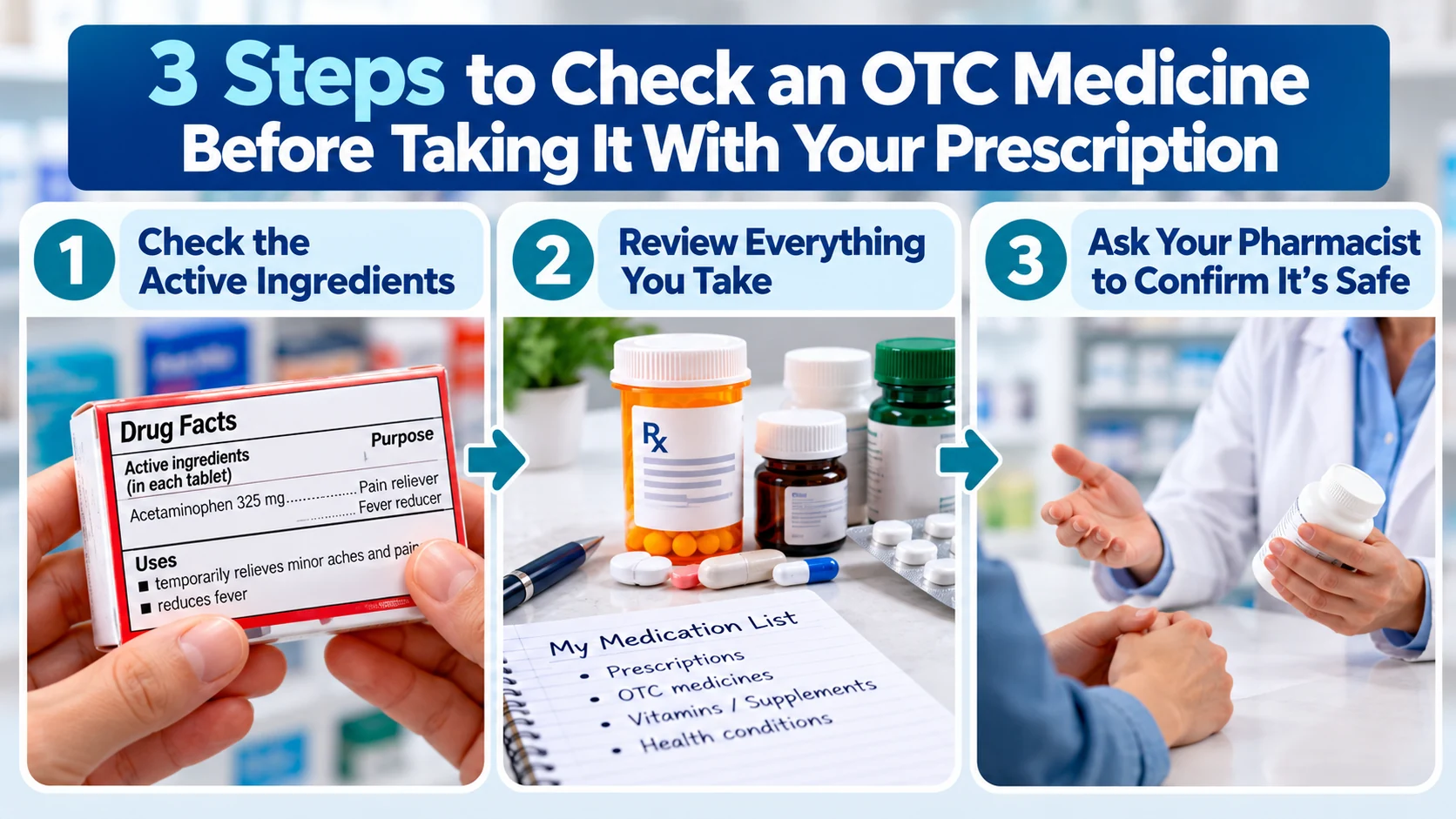
Show your pharmacist everything you take, including nonprescription pain relievers, cold remedies, vitamins, and herbal products. Ask whether any combination needs to be avoided, separated in time, monitored, or reviewed with your prescriber. There is no reliable universal list of just “two drugs that cannot be taken together”; interaction risk depends on the specific products and circumstances.
Which side effects should I know about, and which warning signs require help?
Ask about likely or important effects for this medication, what to monitor, and whom to contact if a problem occurs. Call 911 for life-threatening symptoms such as severe breathing difficulty, tongue or throat swelling, collapse, or loss of consciousness. If you later suspect a reaction, see our guide on what to do about possible medication side effects.
Are there activities, drinks, or other precautions I should avoid?
Ask whether the medicine may affect driving, operating machinery, alcohol use, sun exposure, or other everyday activities. The relevant precautions differ substantially from one medicine to another.
How should I store it, and does it need special handling?
Check whether the medication needs refrigeration, protection from moisture or light, special measuring equipment, or a particular disposal method. Keep medicines secured away from children and pets, and follow product-specific storage instructions.
How will I know whether it is working, and how long might that take?
Ask what changes to expect, when they might become noticeable, and whether any monitoring or laboratory tests are needed. Not all medications produce a symptom you can feel, so some require scheduled follow-up rather than self-assessment.
How long should I take it, and when should I follow up?
Confirm whether the medicine is intended for a short course or ongoing use, what to do before running out, and when to contact your prescriber or pharmacist. Do not stop or change a prescribed treatment simply because you feel better without checking the instructions for that medicine.
What Should You Bring When Asking About a New Prescription?
You do not need to memorize medical terms. The most helpful preparation is an accurate picture of what you already use and any concerns that could affect treatment.
- A current medication list: prescriptions, over-the-counter products, vitamins, supplements, and how you take them.
- Allergies and past reactions: include what happened, if known.
- Relevant health circumstances: for example, pregnancy or breastfeeding, kidney or liver concerns, or trouble swallowing, when applicable.
- Practical barriers: cost, difficult schedules, problems opening containers, or concerns about using a medication device.
- Your own questions: write down the two or three things you most want explained.
For help understanding the printed directions, read How to Read a Prescription Label.
How Can You Make Sure You Understand the Answers?
Before leaving, try explaining the plan in your own words: “I’ll take this amount at this time, and if I miss a dose I should do this.” This simple teach-back approach gives your pharmacist a chance to clarify anything confusing.
If you need instructions in another language, larger print, or a demonstration, ask what assistance is available. For an overview of the conversation itself, see What Is a Pharmacist Consultation and What Happens During One?
When Might You Need Additional Questions?
Some patients need more individualized guidance. If you take several medications, ask whether your new prescription changes the timing or safety of your existing routine. If you have difficulty swallowing, ask whether an appropriate alternative formulation is available; do not crush or split a tablet unless a pharmacist or prescriber confirms it is safe for that product.
If cost or insurance coverage could prevent you from starting treatment, mention it before leaving. A pharmacist may be able to explain coverage issues or help you contact the prescriber about an appropriate alternative. For ongoing medication questions, ABC Drugs offers free pharmacist consultations at 2095 Madison Avenue, New York, NY 10037.
Frequently Asked Questions
What is the most important question to ask when starting a new medication?
There is no single question that covers every prescription. A good starting point is: “Exactly how should I take this medicine, and what should I do if something goes wrong?” Also confirm its purpose, interactions, important warnings, and follow-up instructions.
Should I ask my doctor or my pharmacist about a new medication?
Both can help, but their roles differ. Your prescriber determines the treatment plan and evaluates the underlying condition; your pharmacist can explain how to use the medication, check for potential medication-related problems, and clarify prescription instructions. Some concerns require coordination between both professionals.
Can a pharmacist check whether two medications are safe to take together?
Yes. Pharmacists can screen for potential interactions and assess whether additional precautions or prescriber input may be needed. Bring a complete list of all medications and supplements because the answer depends on the exact products, doses, and patient circumstances.
What if I forgot to ask a question before leaving the pharmacy?
Contact the pharmacy and ask for clarification. If you are unsure how to take the medicine safely, resolve the question before taking a dose when possible. Seek urgent medical care for significant symptoms and emergency help for life-threatening reactions.
Sources & References
- U.S. Food and Drug Administration: Tips for Talking With Your Pharmacist.
- U.S. Food and Drug Administration: Pharmacists Help You Use Medicines Safely.
- National Library of Medicine, MedlinePlus: Drugs, Herbs and Supplements.
Medical disclaimer: This article is for general educational and informational purposes only and is not a substitute for personalized medical advice. Talk with your pharmacist or healthcare provider about questions concerning your medications or health conditions.