Direct Answer
Prior authorization is an insurance coverage review required for certain prescription medications. Your prescriber may need to provide clinical information before your plan decides whether it will pay for the medication. A prior authorization requirement does not automatically mean the medication has been denied.
Key Takeaways
- Prior authorization is an insurance requirement, not a new prescription.
- The prescriber often supplies clinical information; the insurer makes the coverage decision.
- Processing times and urgent-review options depend on the plan and circumstances.
- Approval may still leave a copay, deductible, or other plan restriction.
- If treatment may be interrupted, contact your pharmacist and prescriber promptly.
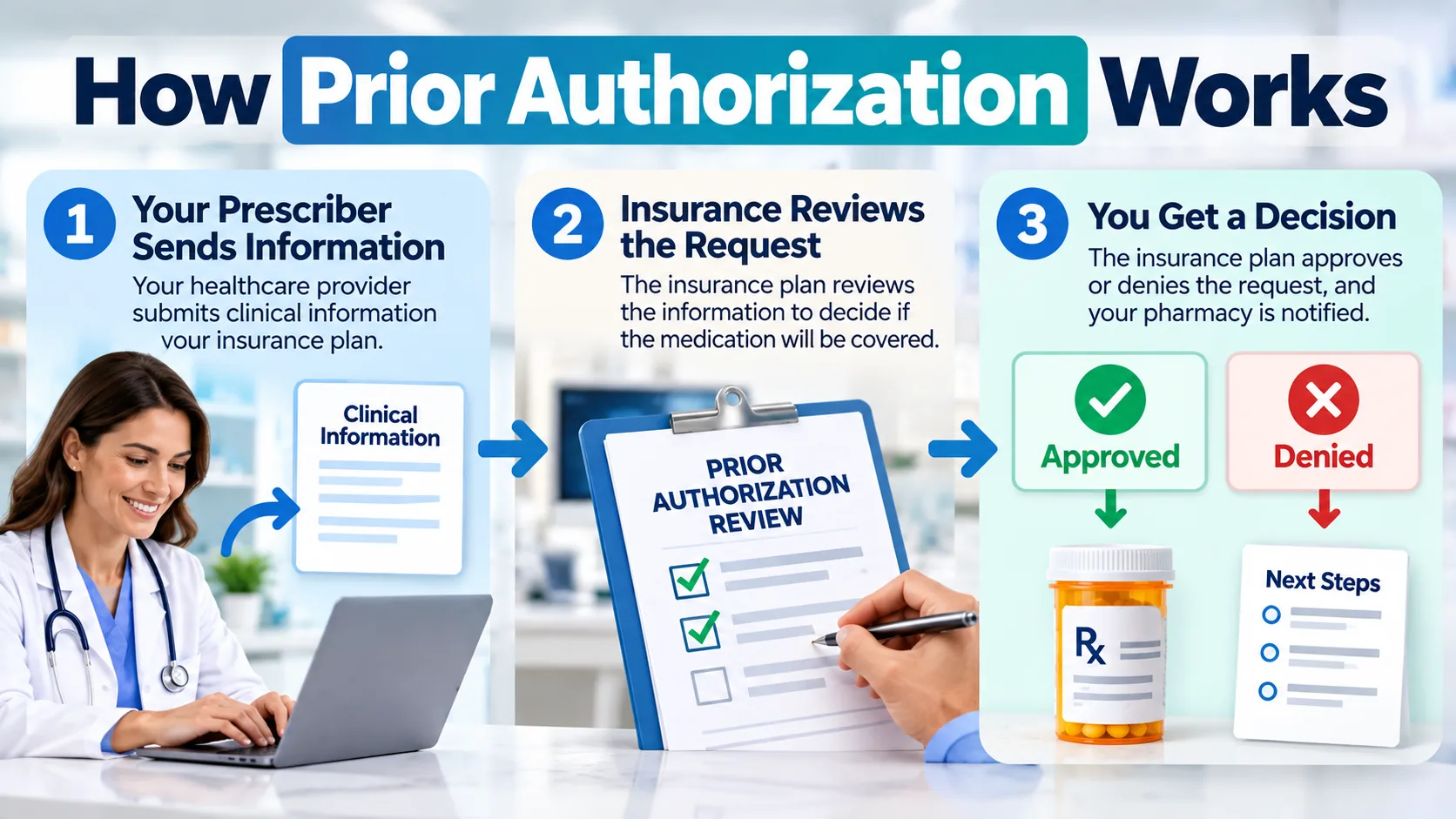
What Is Prior Authorization for a Prescription?
Prior authorization (sometimes called prior approval) is a coverage requirement used by some health insurance plans. Before the plan will pay for certain medications, it asks for additional information to determine whether its coverage criteria are met.
Your healthcare professional can prescribe a medication even when your plan requires prior authorization. However, the prescription and the insurance payment decision are separate matters. A prior authorization requirement is not automatically a final denial.
Why Do Insurance Plans Require Prior Authorization?
Plans may apply prior authorization to review whether a medication meets their coverage rules. Requirements may relate to the diagnosis, previous treatments, dosing or quantity, or other plan-specific clinical criteria. The requirements vary by medication and insurance plan.
A plan's coverage rule does not determine by itself whether a treatment is medically appropriate for an individual. Your prescriber remains responsible for clinical decisions, and the insurer decides whether its plan will cover the requested medication.
How Does the Prior Authorization Process Work?
Prior authorization is one possible reason a prescription insurance claim may not go through. For other common causes, see our guide, Why Was My Prescription Rejected by Insurance?
- The pharmacy submits the claim. A claim response may indicate that prior authorization is required.
- The prescriber receives the request. The prescriber's office may need to submit relevant clinical information to the plan.
- The insurance plan reviews it. The plan applies its coverage criteria and may request more information.
- A decision is communicated. If approved, the pharmacy may be able to resubmit the claim under the plan's terms. If denied, the notice or plan can explain potential next steps.
Not every prior authorization follows the same sequence, and approval does not necessarily mean a medication has no copay or other coverage conditions.
Who Handles Each Part?
| Party | Typical role |
|---|---|
| Pharmacy | Identifies the claim response, explains what it indicates, and helps coordinate next steps when possible. |
| Prescriber | Determines appropriate treatment and supplies clinical information or requests an exception when appropriate. |
| Insurance plan | Reviews the request and makes the coverage decision under the plan's rules. |
| Patient | Confirms coverage information, follows up with the relevant parties, and explains any urgency or risk of running out. |
ABC Drugs offers prescription insurance assistance to help patients understand insurance-related prescription questions. The pharmacy cannot guarantee that an insurer will approve a request.
How Long Does Prior Authorization Take?
There is no single processing time that applies to every insurance plan or prescription. Timing can depend on the type of coverage, whether the request is complete, the review category, and whether additional information is needed.
Some plans have different procedures for urgent requests. Ask your insurer or prescriber's office which review process applies to your situation and whether an expedited review is appropriate. Do not assume that every request qualifies for an urgent timeline.
What Happens If Prior Authorization Is Approved?
An approval generally means the plan has authorized coverage under specified conditions, which may include an effective period, quantity, or other limitations. The pharmacy may then resubmit the claim and confirm the applicable out-of-pocket cost.
Approval does not guarantee a zero-dollar copay or remove every other insurance requirement. If the claim still does not process, ask the pharmacist which issue remains.
What Happens If Prior Authorization Is Denied?
A denial means the plan did not approve the request as submitted. The next step depends on the plan and the reason given. Your prescriber may be able to supply additional information, discuss a covered alternative, or pursue an exception or appeal where available.
For Medicare prescription drug coverage, formal coverage determination and appeal procedures may apply. Other insurance plans have their own rules. Ask for the decision details and available review options rather than assuming every plan uses the same process.
For background on broader claim issues, see our guide to insurance coverage when switching pharmacies.
What If You Are Running Out of Medication?
Tell your pharmacist and prescriber promptly if a prior authorization delay may interrupt treatment. Share the medication involved, when your supply will run out, and whether you have already missed any doses. They can assess clinically appropriate options and whether an urgent coverage request is available.
Do not stop, double, skip, or change doses on your own because an insurance request is pending. If you have severe symptoms or a medical emergency, seek immediate medical care.
What Can You Do While a Request Is Pending?
- Ask whether the claim response specifically requires prior authorization.
- Confirm that your prescriber's office knows a request is needed.
- Check that your insurer has your correct membership information.
- Ask who is waiting for information and when follow-up would be appropriate.
- Explain any time-sensitive medication needs to your pharmacist and prescriber.
- Keep any reference numbers or decision notices you receive.
If the problem involves refill timing rather than prior authorization, our guide to prescription refills versus renewals explains an important distinction.
Frequently Asked Questions
Is prior authorization the same as a prescription?
No. Your prescriber writes the prescription; prior authorization is an insurance coverage review for certain medications.
Does prior authorization mean my medication was denied?
No. A requirement for review is not itself a final denial. The insurer makes a coverage decision after reviewing the request.
Who submits the prior authorization request?
The prescriber or their office typically provides the clinical information, sometimes using an insurer-specific process. The pharmacy may help identify the requirement.
Can the pharmacist approve prior authorization?
No. The insurer or plan makes the coverage decision. The pharmacy can explain claim messages and help coordinate next steps.
How long will my prior authorization take?
It varies by plan, request type, and whether additional information is needed. Ask your insurer or prescriber about the applicable process.
Will I have a copay after approval?
Possibly. Approval of coverage does not eliminate deductibles, copays, coinsurance, or other applicable plan rules.
What if my request is denied?
Ask for the reason and any applicable exception or appeal options. Your prescriber can help evaluate appropriate treatment and coverage alternatives.
Can I pay for the medication while approval is pending?
That may be possible in some situations, but cost, reimbursement, and dispensing rules vary. Discuss options with the pharmacy before deciding.
Can a prior authorization expire?
Yes. Some approvals are valid only for a specified period or set of conditions, and another review may be required later.
What if I am about to run out of medication?
Contact your pharmacist and prescriber promptly. Explain the urgency and do not change your medication regimen independently.