Starting a prescribed weight-management medication can raise questions that are easy to forget at the pharmacy counter. You may want to know how to follow the instructions, what side effects to watch for, whether it fits with your other medicines, and what to do when a refill is due. Bringing a short checklist helps you get answers that apply to your actual prescription.
What Are the Five Most Important Questions to Ask Your Pharmacist?
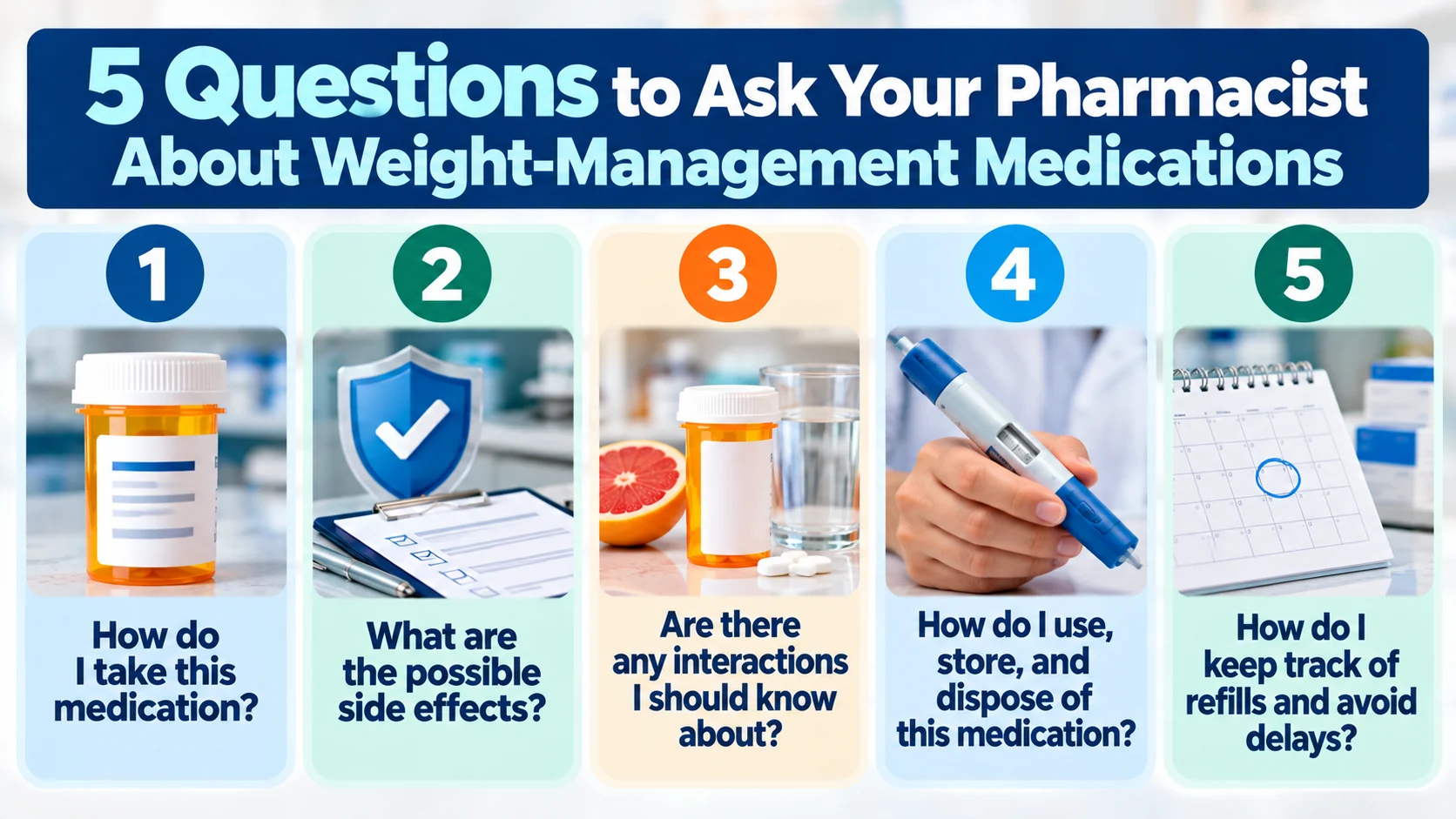
If you have only a few minutes, use this checklist. Ask for answers based on your prescription label and the manufacturer's instructions for your specific medication.
- How exactly should I take or use this medicine? Confirm the prescribed schedule, administration instructions, and whether a dose change is planned.
- Which side effects should I expect, and which symptoms are serious? Ask what to monitor and when to contact your care team.
- Does it affect any of my other medicines or health conditions? Request a review of your complete medication list and relevant precautions.
- How should I store and handle it? Ask about refrigeration, travel, expiration, and device handling if applicable.
- What should I do if I miss a dose or cannot obtain my refill? Ask for product-specific instructions and whom to call before making changes.
These questions are a starting point, not a substitute for individualized counseling. Your pharmacist may identify other questions based on the medication, your history, and the prescription.
What Should I Ask About Taking My Weight-Management Medication Correctly?
Start by confirming the medication name, strength, directions, and schedule on the pharmacy label. Ask the pharmacist to explain unfamiliar terms and to clarify any difference between what your prescriber told you and what appears on the label.
Is my dose supposed to change over time?
Some medications have a planned dose-escalation schedule, while others do not. Ask whether your prescription includes a change and how you will know when it is appropriate. Do not increase a dose simply because you have not noticed a particular result.
Does timing with food or other medicines matter?
Instructions can differ by formulation and product. Ask whether your medication has food, timing, or administration requirements. Do not assume that directions for an injectable medication also apply to an oral medication.
How do I know I received the right product?
Before leaving the pharmacy, compare the label with the medication you expected. If the product, strength, device, or directions look unfamiliar, ask the pharmacist to explain before using it.
What Should I Ask About Side Effects, Interactions, and Warning Signs?
Ask your pharmacist to separate common side effects from symptoms that need prompt medical assessment. Depending on the product, gastrointestinal effects and other reactions may be discussed; the relevant risks and precautions are described in that medication's official labeling.
Which symptoms mean I should call someone?
Ask for a clear action plan: which symptoms can be discussed during routine follow-up, which require a same-day call, and which are emergencies. Severe or persistent symptoms should not be ignored. For trouble breathing, swelling of the face or throat, or other signs of a severe allergic reaction, seek emergency care.
Could this medicine interact with my other medications?
Bring a complete list of prescription medications, nonprescription drugs, vitamins, and supplements. Mention medicines used for diabetes and any history that your care team should know about. Your pharmacist can check for potential medication-related concerns and may recommend contacting your prescriber when treatment decisions are needed.
Are there important precautions for my medical history?
Ask your pharmacist to review the product's warnings and whether your prescriber should evaluate any relevant conditions, pregnancy plans, or upcoming procedures. Specific contraindications and precautions differ among medications; do not use a generic online list as a personal eligibility determination.
What Should I Ask If My Prescription Is an Injection?
If your medication comes as a pen or another injection device, ask the pharmacist to explain the manufacturer's instructions for your exact device. A demonstration with an appropriate training device, when available, can be more useful than trying to remember written directions alone.
- How do I identify the correct device and prescribed dose?
- Where does the product's labeling say it may be injected, and what technique should I follow?
- What should I do if I am unsure whether a dose was delivered?
- How do I store the medicine before and after first use, if applicable?
- How do I dispose of used needles or sharps safely?
What Should I Ask About Missed Doses, Refills, and Insurance?
What if I miss a dose or have been off the medicine for a while?
Ask for the missed-dose instructions for your specific medication and prescribed schedule. Different products have different time windows and restart considerations. Do not double up or resume a previous dose after a prolonged interruption without appropriate guidance. Our separate missed-dose article will address this topic in more detail.
When should I request my next refill?
Ask how early your pharmacy can process a refill and whether the next prescription needs prescriber review, a dose adjustment, or a new authorization. If the medication is delayed or unavailable, see our related guide: Why Is My Weight-Management Prescription Delayed or Out of Stock?
What should I ask if insurance does not cover the prescription?
Ask whether the pharmacy received a claim rejection, whether prior authorization appears necessary, and which party should act next. Coverage decisions depend on the health plan and prescribed indication. For the insurance-specific steps, read Does Insurance Cover Weight-Management Prescriptions?
Should I Ask My Pharmacist or My Prescribing Clinician?
Start with the pharmacist for questions about the dispensed product, label directions, administration technique, storage, interactions, refill processing, and pharmacy claim messages. The pharmacist can recognize concerns that should be referred back to the prescriber.
Contact the prescriber for diagnosis, whether a medication is appropriate for you, treatment goals, dose changes, new prescriptions, management of significant side effects, and clinical documentation required by insurers. The two professionals often work together, but neither role replaces the other.
For a general explanation of pharmacy counseling, see ABC Drugs Pharmacist Consultation.
How Can I Prepare for a Helpful Pharmacy Conversation?
Before your visit or call, gather the medication bottle or box, your prescription directions, a current medication and supplement list, and any questions you wrote down. If you use an injection device, bring its packaging or instructions when practical. Tell the pharmacist about any trouble understanding the directions or using the device.
Ask the pharmacist to repeat or write down important instructions in a way you can follow. It is appropriate to ask the same question again if the answer is unclear.
Frequently Asked Questions
What should I ask before taking my first dose?
Confirm the medication name, prescribed dose, timing, administration instructions, important warnings, and whom to contact if you have a problem.
Can my pharmacist show me how to use an injection pen?
Ask whether the pharmacy can review the manufacturer's device instructions or provide an appropriate demonstration. Device designs differ, so request help for your exact product.
Should I bring all my medications to the pharmacy?
A complete, current list is very helpful. Include prescription medicines, over-the-counter products, vitamins, and supplements; bring containers when clarification is needed.
Can a pharmacist tell me whether my side effects are normal?
A pharmacist can explain known effects and warning signs and help determine when you should contact your prescriber or seek urgent care. New, severe, or persistent symptoms deserve prompt attention.
Can I take my weight-management medicine with other prescriptions?
That depends on the exact medicines and your circumstances. Ask the pharmacist to review your full medication list and coordinate with your prescriber if an adjustment may be needed.
Can the pharmacist change my weight-management dose?
Do not assume the pharmacy can independently change your prescribed treatment. Dose adjustments generally require direction from the authorized prescriber, subject to applicable practice rules.
What if I am not sure an injection worked?
Do not automatically take an extra dose. Contact your pharmacist or prescriber with the product name and what happened so you can receive product-specific instructions.
What should I ask about storing my medication during travel?
Ask about the exact product's temperature requirements, time limits outside refrigeration when applicable, and safe transport. Follow its official instructions rather than generic advice.
Can the pharmacist help when my refill is out of stock?
The pharmacy can clarify current availability and discuss appropriate next steps with you or your prescriber. It cannot guarantee supply or authorize an unapproved substitution.
Can a pharmacist explain why insurance rejected my prescription?
The pharmacist can often explain the pharmacy claim message and identify whether the insurer or prescriber needs to act. Final benefit decisions and appeals are handled under the health plan's rules.
Questions About Your Weight-Management Prescription in Harlem?
At ABC Drugs, 2095 Madison Ave, New York, NY 10037, patients can ask pharmacy-related questions about medication instructions, safe handling, refills, and insurance claim responses. Our team can coordinate with your prescriber when appropriate. Individual treatment decisions remain with your prescribing clinician.
Learn about Weight-Management Prescription Support or call (212) 491-2501.
Sources & References
- MedlinePlus — Drugs, Herbs and Supplements (patient-friendly drug information and product-specific precautions).
- U.S. Food and Drug Administration — Information for Consumers and Patients (prescription medication safety).
- FDA — Drug Safety and Availability (official drug safety information).
- Centers for Disease Control and Prevention — Diabetes Treatment (medication management context; not a substitute for product-specific labeling).
- FDA — Disposal of Unused Medicines (general disposal guidance; ask about sharps-specific local procedures).