Direct Answer: What if you can’t afford your prescription?
If you cannot afford your prescription medication, ask your pharmacist to check the insurance claim and discuss generic options, covered alternatives, and legitimate savings or patient assistance programs. Your prescriber may need to approve a different medication or submit a coverage request. Eligibility and savings vary. Do not skip doses or stop prescribed medication without professional advice.
Key Takeaways
- Tell your pharmacist when cost is preventing you from filling a prescription.
- Check insurance billing and ask about appropriate generic or covered alternatives.
- Assistance programs and coupons have eligibility and coverage restrictions.
- Never ration or change your medication without guidance.
What should you do if you cannot afford your prescription?
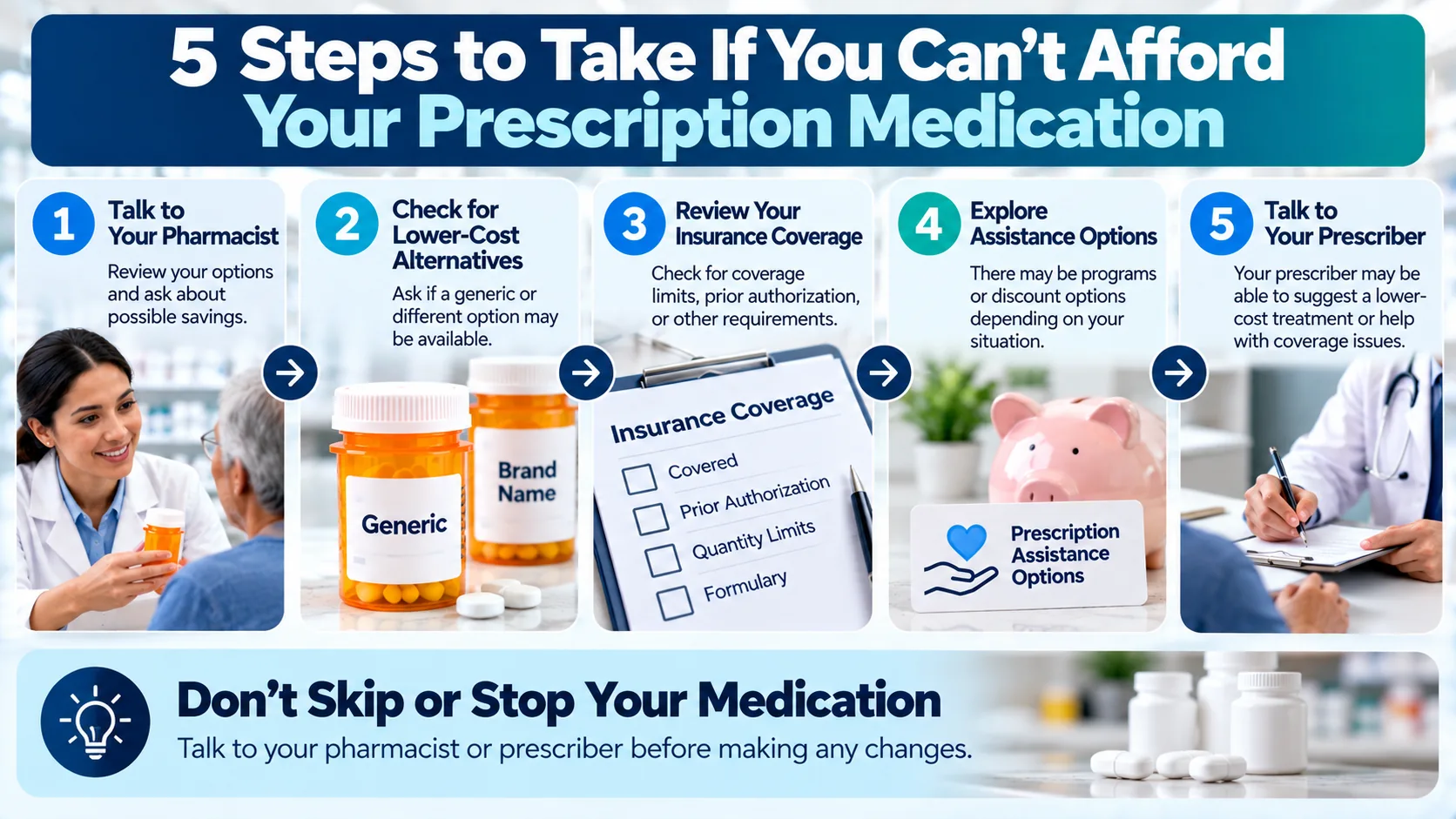
Start by telling your pharmacist that the medication is too expensive. Ask whether the claim was processed correctly, whether a covered generic or other lower-cost option may be available, and whether you qualify for a legitimate assistance program. Your prescriber may need to authorize a different medication or address a coverage restriction. Do not change your dose, split tablets, or stop treatment on your own to make a prescription last longer.
If you have already missed doses, are running out of an essential medication, or are worried about symptoms, contact your prescriber or pharmacist promptly. Seek urgent medical care for an emergency.
What to do before leaving the pharmacy without your medication
- Ask what you would pay today. Request clarification about whether the amount is a copay, coinsurance, deductible-related charge, or cash price.
- Ask the pharmacy to review the claim. An outdated insurance record, incorrect billing information, or a plan restriction may affect the result.
- Ask whether a generic or other lower-cost option exists. Your pharmacist can explain when a substitution is permitted and when your prescriber must approve a change.
- Tell your prescriber about the cost barrier. They may be able to discuss clinically appropriate alternatives or coverage requests.
- Ask about legitimate assistance programs. Eligibility, terms, and restrictions vary.
Can a generic medication cost less?
FDA-approved generic drugs have the same active ingredient, strength, dosage form, route of administration, and intended use as their brand-name counterparts, and they must meet applicable quality and bioequivalence standards. Many generics cost less, but the amount you pay depends on your plan, pharmacy, and specific medication. Not every prescription has a generic equivalent. Ask your pharmacist whether a generic substitution is appropriate and permitted for your prescription.
Check your insurance coverage before paying more
A higher-than-expected price may reflect your deductible, coinsurance, formulary tier, pharmacy network, or a rejected claim. A prescription copay increase does not necessarily mean the pharmacy increased its price.
If your claim was rejected, review common prescription insurance rejection reasons. Some medications require prior authorization; others may be excluded from your plan's coverage. These situations have different next steps. A prior authorization request or formulary exception does not guarantee approval.
Prescription assistance programs: what to ask
Depending on the medication and your circumstances, assistance may be available through a drug manufacturer, nonprofit organization, state program, or other eligible resource. Programs may consider income, insurance status, diagnosis, residency, or the medication prescribed. Availability and funding can change, and not everyone qualifies.
Ask your pharmacist or prescriber which programs are appropriate, where to find the official eligibility rules, and whether paperwork or a prescriber signature is required. Be cautious of websites that promise guaranteed free medications or request unnecessary personal information.
Prescription discount cards vs. insurance
A prescription discount card may offer a different cash price for some medications. It generally is not health insurance, and a discounted cash transaction may not count toward your insurance deductible or out-of-pocket maximum. Compare the actual price and ask how the transaction will be processed before choosing an option.
Important: Manufacturer copay coupons generally cannot be used for prescriptions paid for by federal healthcare programs such as Medicare or Medicaid. Other assistance programs have their own rules. Do not assume that a coupon or discount can be combined with insurance.
What if you have Medicare or Medicaid?
If you have Medicare prescription drug coverage, review your plan's formulary and cost-sharing rules. Eligible people with limited income and resources may qualify for Medicare's Extra Help program. Medicare beneficiaries can also seek free, unbiased counseling through their State Health Insurance Assistance Program (SHIP).
If you have Medicaid, ask your pharmacy or plan about covered alternatives, preferred drug lists, and the process for addressing a coverage restriction. New York Medicaid pharmacy rules depend on the applicable program and prescription. Never assume that a commercial manufacturer's coupon is available for a Medicaid-covered prescription.
What if you need the medication urgently?
Tell the pharmacist and prescriber exactly when you will run out and whether you have missed doses. Ask what safe, lawful options are available for your specific medication and coverage situation. Emergency supplies, temporary fills, or alternative treatments may be possible in some circumstances, but they are not guaranteed and depend on clinical judgment, applicable law, and plan rules.
Do not ration medication, take someone else's prescription, or change treatment without professional guidance. If you have severe symptoms or a medical emergency, seek emergency care.
How ABC Drugs can help you understand your options
ABC Drugs can help patients review prescription insurance questions, understand a claim response, and identify issues to discuss with their insurer or prescriber. Learn more about our Prescription Insurance & Copay Assistance service. Assistance with understanding coverage does not guarantee a lower price, approval, or program eligibility.
Frequently Asked Questions
What should I do if I cannot afford my prescription today?
Tell your pharmacist before leaving. Ask for a claim review, any appropriate generic options, and available assistance resources. Contact your prescriber if a treatment change or coverage request is needed.
Can my pharmacist help me find a cheaper medication?
A pharmacist can review possible generic substitutions, billing issues, and available options. A different prescription may require your prescriber’s approval.
Is a generic medication always cheaper?
No. Generics often cost less, but your actual price depends on the medication, insurance plan, and pharmacy.
Can I use a discount card instead of insurance?
Sometimes a discount card offers a lower cash price, but it is not insurance and the purchase may not count toward your deductible or out-of-pocket maximum. Ask the pharmacy to compare the available options.
Can I use a manufacturer coupon with Medicare or Medicaid?
Manufacturer copay coupons generally cannot be used for prescriptions paid for by federal healthcare programs, including Medicare and Medicaid. Check the program’s official terms.
What is a patient assistance program?
It is a program that may help eligible patients obtain certain medications at reduced cost or no cost. Eligibility and availability vary by program.
What if my insurance says my medication is not covered?
Ask why it is not covered. Depending on the plan, your prescriber may discuss a covered alternative, request an exception, or pursue an appeal.
Can I ask my doctor to prescribe something less expensive?
Yes. Explain the cost barrier and ask whether a clinically appropriate lower-cost option is available. Do not switch treatments on your own.
Should I skip doses to make my prescription last longer?
No. Skipping doses or changing how you take medication can be harmful. Contact your pharmacist or prescriber for guidance.
Is there help for people with Medicare prescription costs?
Some people may qualify for Medicare Extra Help, depending on eligibility. You can also contact your State Health Insurance Assistance Program for counseling.
Sources & References
- U.S. Food and Drug Administration — Generic Drug Facts
- Medicare.gov — Help with Drug Costs
- Social Security Administration — Extra Help with Medicare Prescription Drug Plan Costs
- State Health Insurance Assistance Programs — Medicare Counseling
- HealthCare.gov — Prescription Medications and Health Coverage
Medical disclaimer: This article is for general educational and informational purposes only and is not a substitute for personalized medical advice. Talk with your pharmacist or healthcare provider about questions concerning your medications or health conditions.