By ABC Pharmacy
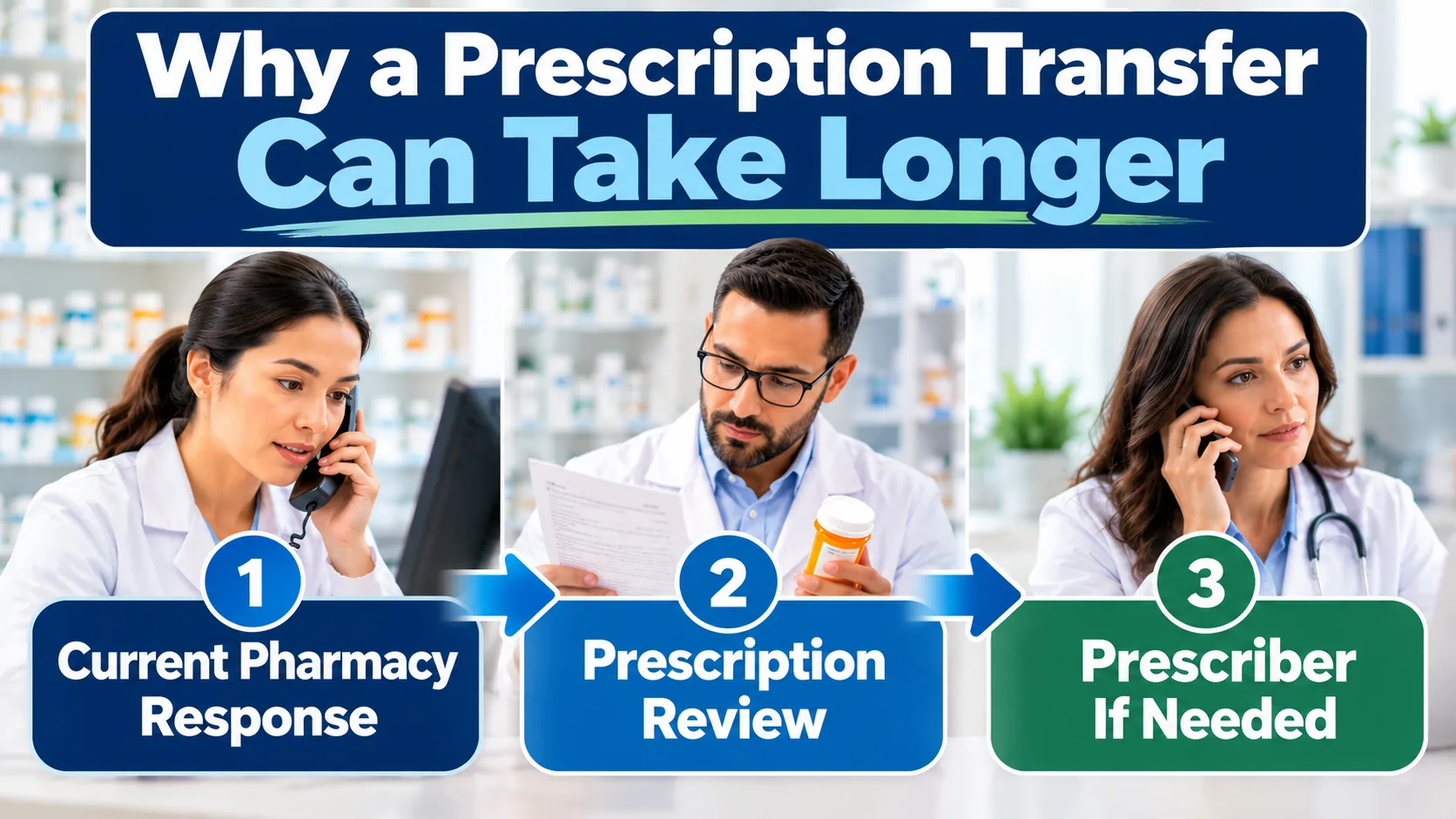
A prescription transfer may take longer when the pharmacies have not finished exchanging information, the prescription needs clarification or renewed authorization, or special transfer requirements apply. Even after the transfer is complete, insurance processing or medication availability can delay pickup. Ask the receiving pharmacy: “Has the transfer been completed, and what specific step is still pending?”
How long does a prescription transfer usually take?
Timing varies with the prescription and the parties involved. ABC Drugs’ prescription transfer service page explains that many transfers may be completed within a few hours, but additional information or a new prescription can extend the process. This is not a promise for an individual request.
Ask for two updates: whether the prescription information has arrived, and when the medication is expected to be ready. These are different milestones. If the pharmacy gives you a follow-up time and you have not heard back, contact it again.
Why is the new pharmacy waiting for the old pharmacy?
The receiving pharmacy needs a complete prescription transfer record. New York’s transfer guidance requires documentation such as the original prescription number, relevant dates, pharmacy information, and the pharmacists involved.
A request may still be awaiting a response, or the pharmacies may need to resolve an incomplete record. Giving the correct branch and prescription number helps the pharmacy identify the request. A bottle or photograph can help identify your medication, but it does not replace the required exchange between the pharmacies.
For a broader explanation of the process, read what happens when you transfer a prescription.
When can a transfer require help from your prescriber?
The pharmacy may need a new prescription if there is no remaining valid authorization to fill the medication. It may also need the prescriber to clarify directions or another prescription detail before dispensing. A transfer request cannot substitute for prescribing authorization.
If you are told the request is waiting on your prescriber, ask whether the office has been contacted and exactly what it needs to provide. Tell the office which pharmacy should receive its response. See our guide to remaining refills when transferring a prescription for the refill-specific explanation.
Do controlled medications have different transfer requirements?
Yes. Current New York guidance permits controlled-substance transfers subject to applicable requirements. Eligibility must be assessed for the specific prescription; do not assume all controlled medications are either always transferable or never transferable.
Why is my prescription transferred but not ready to collect?
A completed transfer moves prescription information. It does not by itself complete all the steps needed to dispense the medicine.
Insurance processing or coverage requirements
The pharmacy may need to resolve a coverage issue. For example, Medicare drug plans may require prior authorization, step therapy, or quantity limits. Medicare’s explanation of drug plan rules describes these requirements. Other insurance plans have their own rules. Ask whether the pending issue is coverage rather than the transfer itself.
Medication availability
The pharmacy may need to order the medicine. Being out of stock at one location does not necessarily mean there is a national shortage. The FDA explains that local supply problems can be temporary. Ask about expected availability and whether your pharmacist or prescriber should discuss another option with you.
Prescription review and preparation
Pharmacists review prescriptions before dispensing. If a question about directions or a possible interaction needs clarification, preparation may have to wait. This is another reason a transfer confirmation and a ready notification may arrive at different times.
What should I ask if my prescription transfer is delayed?
- “Did you receive my transfer request?” Confirm the medication and original pharmacy branch.
- “Has the prescription information arrived?” Establish whether the transfer itself is still pending.
- “What exactly is holding up the next step?” Ask whether information, authorization, coverage, stock, or clarification is needed.
- “Who needs to act?” Find out whether you should contact the original pharmacy, prescriber, or insurer.
- “When should I check back?” Agree on a follow-up point and confirm how you will receive a ready notification.
You can say: “I requested a transfer for [medication] from [pharmacy]. I have enough until [date or next dose]. Please tell me what is pending and what I should do next.”
What if I am running out before the transfer is complete?
Contact the pharmacist promptly rather than waiting for an automatic update. State how much medication remains and when your next dose is due. If necessary, contact your prescriber for a plan to avoid an interruption.
Ask what options are appropriate for your particular medication. Availability of a temporary supply depends on the circumstances and applicable rules; it is not guaranteed. Do not skip, stretch, double, borrow, or change doses without individualized professional guidance.
How can I help prevent avoidable transfer delays?
- Start before your supply is nearly exhausted whenever possible.
- Provide your correct name, date of birth, current contact details, medication information, and original pharmacy branch.
- Have the prescription number and current insurance information available if requested.
- Tell the receiving pharmacy about recent prescription changes and how much medication you have left.
- Respond to requests for information and confirm readiness before traveling to collect the medication.
These steps help the pharmacy investigate your request. They cannot remove every insurance, supply, or prescribing requirement.
Frequently asked questions about prescription transfer delays
How long should a prescription transfer take?
There is no single completion time for every prescription. Ask the receiving pharmacy for an estimate based on your request and whether it is waiting for the other pharmacy, your prescriber, or another step. An estimate is not a ready-for-pickup confirmation.
Can a prescription transfer be completed the same day?
It may be possible, but same-day completion is not guaranteed. Tell the receiving pharmacy when you need the medication and ask what remains outstanding before making plans to collect it.
Why does my new pharmacy say it is waiting for my old pharmacy?
The receiving pharmacy may still need the prescription information required to complete the transfer record. Ask whether the request reached the correct branch and whether any identifying information is missing.
Does “transfer complete” mean my medication is ready?
No. It means the prescription information has moved. The receiving pharmacy may still need to review the prescription, process coverage, obtain stock, and prepare the medication. Wait for a separate ready confirmation.
Should I call my old pharmacy or my new pharmacy first?
Start with the receiving pharmacy. Ask what is missing and who needs to provide it. If it asks you to contact the original pharmacy or prescriber, follow that specific instruction rather than sending several overlapping requests.
Can my doctor send a new prescription instead?
Your prescriber may decide to issue a new prescription when appropriate. Tell both the prescriber and receiving pharmacy that a transfer is already pending so they can reconcile the requests. A new prescription does not automatically resolve stock or insurance issues.
Can a prescription transfer be delayed if I have no refills left?
Yes. Transferring a prescription does not create additional prescribing authorization. If there are no valid refills available, ask whether a new prescription is needed and whether the prescriber has been contacted.
Do weekends or holidays affect prescription transfers?
They can affect coordination when a pharmacy or prescriber’s office is closed or has limited availability. Ask which party must respond and when follow-up is expected; do not assume a business-day estimate includes every calendar day.
Can controlled-substance prescriptions be transferred in New York?
Some can be transferred when the applicable state and federal requirements are met. The pharmacist must assess the specific prescription. Do not assume every controlled prescription can be moved in the same way or within the same timeframe.
What should I do if I will run out before the transfer is finished?
Contact the receiving pharmacist promptly and state the medication, how much you have left, and when the next dose is due. Contact your prescriber if needed. Ask for an individualized plan; do not ration doses, borrow medicine, or change treatment on your own. A temporary supply is not guaranteed.
Sources
This article is for general educational and informational purposes only and is not a substitute for personalized medical advice. Talk with your pharmacist or healthcare provider about questions concerning your medications or health conditions.