A dog finds a dropped pill. A cat reaches an open medicine bottle. Or a pet owner wonders whether a human pain reliever might help an uncomfortable pet. Medicines that are familiar and useful to people can be dangerous—even life-threatening—to dogs and cats.
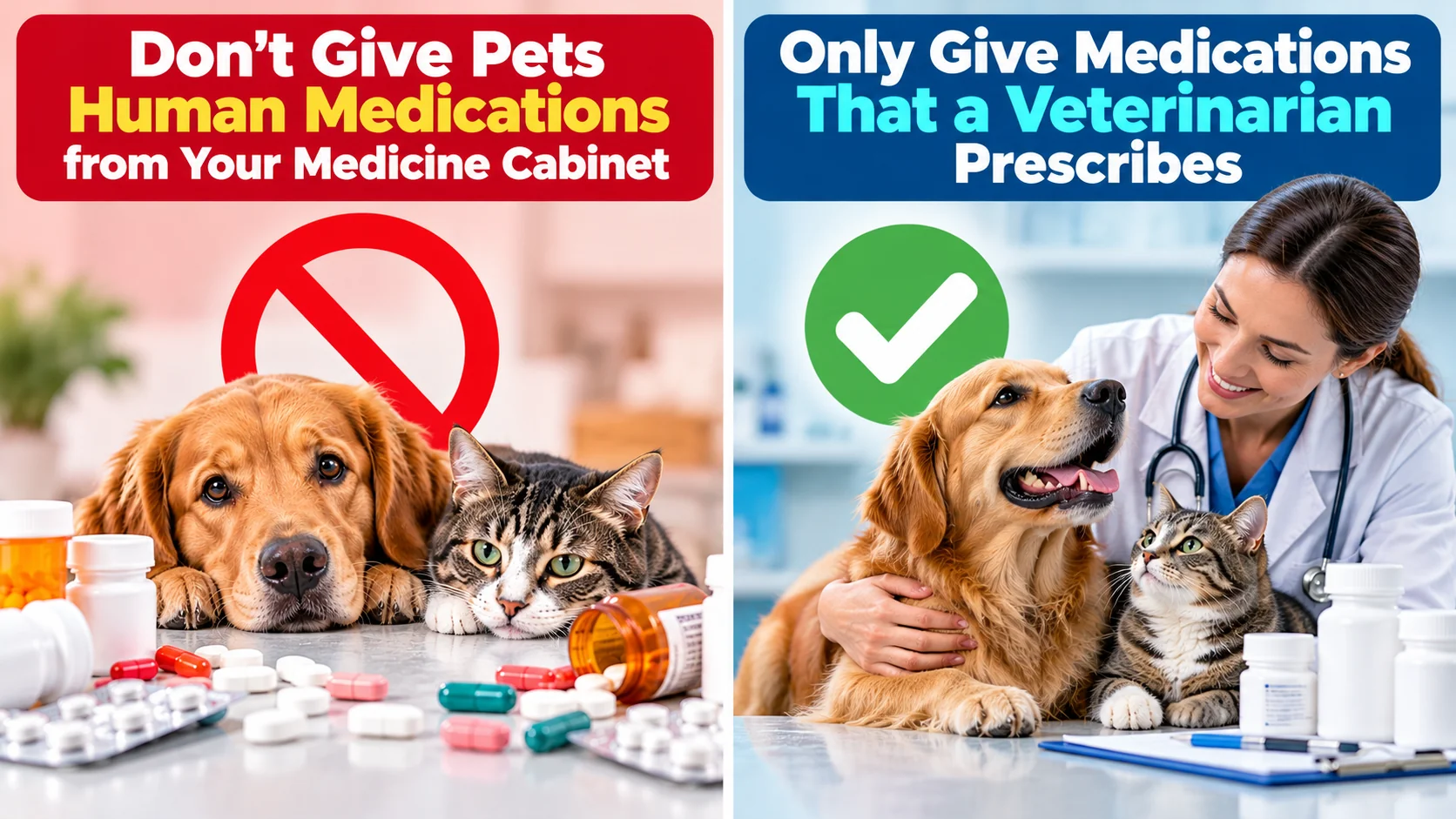
Which Human Medications Can Be Dangerous for Dogs and Cats?
The following groups are important examples—not a complete list. A product’s risk depends on its active ingredients, strength, amount swallowed, the animal’s species and size, and its health. Never use this list to decide that an unlisted medicine is safe.
1. Human pain relievers: ibuprofen, naproxen, and acetaminophen
Ibuprofen and naproxen are nonsteroidal anti-inflammatory drugs (NSAIDs). In dogs and cats, exposure can cause serious gastrointestinal injury, including ulcers or bleeding, and kidney damage. Acetaminophen is particularly dangerous for cats and can cause life-threatening injury, including damage to red blood cells and the liver. Dogs can also be harmed by acetaminophen. Never give these medicines for pet pain unless a veterinarian has specifically prescribed and directed the treatment.
2. ADHD medications and other stimulants
Some prescription medicines used for attention-deficit/hyperactivity disorder (ADHD) contain stimulants. Accidental ingestion by a dog or cat can lead to dangerous agitation, changes in heart rate or blood pressure, tremors, seizures, or other severe effects. A single accessible pill may warrant urgent veterinary assessment; do not attempt to judge safety from the pill’s size.
3. Antidepressants
Some antidepressants can cause serious problems after accidental ingestion, including vomiting, agitation, changes in heart rate, tremors, or seizures. Certain exposures may cause a potentially dangerous syndrome involving excessive serotonin activity. The risk varies by medication and amount. Seek veterinary advice rather than monitoring at home without guidance.
4. Cold, cough, and allergy products
Many multi-symptom products contain more than one active ingredient. Decongestants, including ingredients such as pseudoephedrine or phenylephrine, can be dangerous to pets and may affect the nervous system or cardiovascular system. Even when an individual ingredient is sometimes used in veterinary care, a human combination product may contain additional substances that are unsafe. Read the full ingredient list for the veterinary team; do not give the product yourself.
5. Heart and blood-pressure medications
Accidental ingestion of certain human cardiovascular medicines—including some beta blockers and calcium channel blockers—can cause dangerous changes in heart rate, blood pressure, and circulation. Other heart or blood-pressure medications can also pose risks. The exact drug matters; contact a veterinarian or animal poison-control service promptly if a pet may have swallowed any of them.
Why Medication Risk Is Different for Dogs and Cats
Dogs, cats, and humans do not always absorb, metabolize, or eliminate medicines in the same way. Cats are particularly vulnerable to certain drugs because of differences in how their bodies process some substances. A pet’s size, age, medical conditions, and other medications can also affect the outcome.
Human tablets and liquids may be concentrated for an adult person; a small amount may represent a significant exposure for an animal. Extended-release tablets and combination cold medicines can create additional concerns. Never estimate a “pet-sized” dose by dividing a human tablet.
What Should You Do If Your Pet Swallows Human Medication?
Contact your veterinarian, an emergency veterinary hospital, or an animal poison-control service immediately. Do not wait for vomiting, weakness, agitation, or other symptoms to appear. Some harmful effects can develop later.
- Remove access to the medicine. Keep other pets away from pills or spilled liquids, without putting yourself at risk.
- Call for professional advice right away. Tell the veterinary team that a human medication may have been swallowed, even if the amount is uncertain.
- Have the package available. Share the product name, active ingredients, strength, formulation, possible amount, approximate time of exposure, and your pet’s species and weight if known.
- Follow veterinary instructions. The professional may advise immediate examination or specific next steps based on the exposure.
Do not induce vomiting, give activated charcoal, administer another medication, or try milk, food, or home remedies unless a veterinarian or animal poison-control professional specifically tells you to. If your pet is collapsing, having seizures, struggling to breathe, or severely unwell, seek emergency veterinary care immediately.
But Can a Veterinarian Prescribe a Human Medication to a Pet?
Yes, under applicable rules and when clinically appropriate. Veterinarians may prescribe certain human-approved medicines for animals, but that decision requires professional evaluation and veterinary-specific instructions. A drug that can be used under veterinary supervision may still be harmful if given in the wrong amount, to the wrong species, or without veterinary direction.
For that distinction, read Can a Veterinarian Prescribe Human Medication for a Dog or Cat?. For questions about filling an authorized prescription, see Can a Regular Pharmacy Fill a Pet Prescription From Your Veterinarian?. For OTC versus prescription requirements, see Can You Buy Pet Medication Without a Veterinarian’s Prescription?.
How Can You Prevent Accidental Medication Poisoning?
- Store all medicines securely: Use closed cabinets or containers that pets cannot reach or open; do not rely on a child-resistant cap as pet-proof.
- Keep pills off counters and nightstands: Pets may find dropped tablets under furniture or near bags.
- Take medicines away from pets: Avoid handling loose tablets over food bowls or places where animals gather.
- Secure visitors’ belongings: Handbags, suitcases, and pill organizers may contain medications accessible to curious animals.
- Keep human and pet prescriptions separate: Check the patient name and directions each time; never share leftover medication between people or animals.
If a pet needs treatment, ask a veterinarian rather than reaching for a household medicine.
Frequently Asked Questions
Can I give my dog ibuprofen or naproxen for pain?
No. These human NSAIDs can cause serious harm to dogs and cats, including stomach ulcers, bleeding, and kidney injury. Contact your veterinarian for appropriate pain treatment.
Is Tylenol (acetaminophen) safe for cats?
No. Acetaminophen is particularly dangerous for cats and may cause life-threatening poisoning. If your cat may have swallowed it, seek veterinary or animal poison-control guidance immediately.
What if my pet swallowed one human pill but seems normal?
Call a veterinarian or animal poison-control service immediately. Some exposures can be serious even before symptoms appear, and the risk depends on the exact medication and your pet.
Are human allergy or cold medicines safe for dogs and cats?
Do not assume so. Some products contain decongestants or multiple ingredients that can be dangerous. Only use a product if your veterinarian specifically recommends the exact medicine and directions for your pet.
Should I make my dog or cat vomit after swallowing medicine?
No—not unless a veterinary professional specifically instructs you. Inducing vomiting or using home remedies can make some situations worse.
Can a veterinarian prescribe a medication that is also used by humans?
Yes, in certain circumstances. Veterinarian-authorized use is different from giving a pet medicine from your own cabinet without an animal-specific assessment and instructions.
Questions About a Pet Prescription in Harlem?
ABC Drugs is a neighborhood pharmacy at 2095 Madison Avenue, New York, NY 10037. For a veterinarian-authorized prescription, our pharmacy team can help with prescription-filling questions and check product availability. For suspected poisoning, contact a veterinarian or animal poison-control service immediately—do not wait to call a pharmacy.
Learn about ABC Drugs’ Pet Prescriptions service or call (212) 491-2501 for non-emergency pharmacy questions.
Sources & References
- U.S. Food and Drug Administration. Get the Facts About Pain Relievers for Pets.
- U.S. Food and Drug Administration. Frequently Asked Questions About Animal Drugs.
- ASPCA. Animal Poison Control.
- Pet Poison Helpline. Pet Poison Helpline.