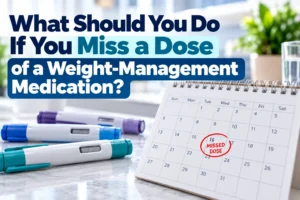
You have a prescription for a weight-management medication, but the pharmacy says it is delayed or out of stock. Does that mean the medication is in a nationwide shortage? Not necessarily. Understanding what is holding up the prescription can help you choose the right next step without changing your treatment on your own.
Why Might a Weight-Management Prescription Be Delayed?
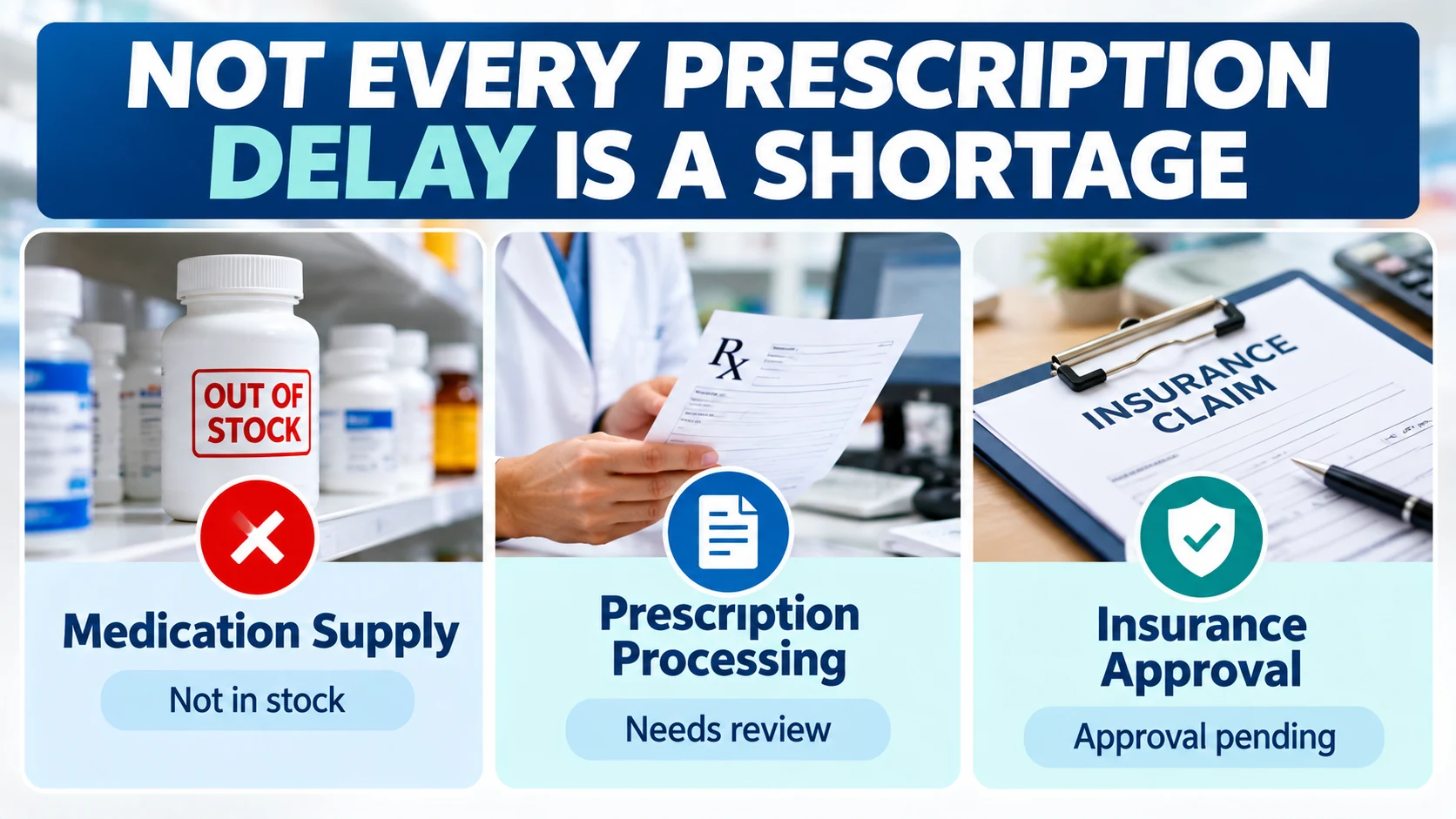
A prescription can be medically appropriate and still require time to fill. The reason matters because each kind of delay calls for a different response.
The exact product or strength is not in stock
Pharmacies stock particular products, package sizes, and strengths. A pharmacy may have one strength but not the one prescribed. Availability can also vary by wholesaler and location. Do not assume a different strength or presentation can be substituted without review.
The supplier cannot provide a confirmed delivery date
Even when a pharmacy places an order, shipment timing may change. Ask whether the expected arrival is confirmed or only an estimate. Avoid relying on an estimated date when planning a time-sensitive dose.
The prescription needs a clarification or an additional processing step
The pharmacy may need to verify the directions, quantity, strength, or other prescription details with the prescriber. Insurance requirements can also delay dispensing. For coverage and prior-authorization questions, see the related Weight-Management Prescription Support service page; those issues are distinct from a stock shortage.
Does “Out of Stock” Mean There Is a National GLP-1 Shortage?
No. A local pharmacy stock issue and a nationwide shortage are not the same. The U.S. Food and Drug Administration (FDA) monitors national drug shortages; a particular pharmacy can experience a temporary supply disruption even when the FDA does not list the drug as nationally in shortage.
For the latest national information, check the FDA Drug Shortages resource. The listing does not tell you whether a specific pharmacy has a particular strength on its shelf today.
Because inventory changes, this article does not label any named GLP-1 product as currently in shortage or available at ABC Drugs.
What Should You Do When Your Prescription Cannot Be Filled?
- Ask for the exact reason. Is the prescribed product or strength unavailable, is a shipment pending, or is the prescription waiting on clarification or insurance processing?
- Ask about timing without assuming a guarantee. Find out whether the pharmacy has a confirmed arrival date, a tentative estimate, or no reliable estimate.
- Tell the pharmacist when your next dose is due. The urgency may differ for someone starting therapy versus someone already following a regular dosing schedule.
- Contact your prescriber when a treatment change may be needed. Your prescriber can assess whether an alternative prescription, adjusted plan, or other clinical action is appropriate.
- Discuss other pharmacy options if appropriate. A different licensed pharmacy may have inventory, but transferring or issuing a prescription can involve product-specific, legal, and insurance requirements.
When calling, have the medication name, prescribed strength, prescription information, and next scheduled dose date ready. These details help the pharmacy identify the issue more efficiently.
What Should You Avoid During a Prescription Delay?
- Do not change the dose yourself. Missed-dose and restart instructions vary by medication and the time since the last dose.
- Do not treat all GLP-1 products as interchangeable. Different products, strengths, devices, and indications may require a prescriber's decision.
- Do not buy from an unverified seller. FDA warns about unapproved GLP-1 products, misleading marketing, and medication errors associated with some compounded products.
- Do not assume a compounded product is FDA-approved. Compounded drugs are not reviewed by FDA for safety, effectiveness, and quality before marketing.
Frequently Asked Questions
Why does my pharmacy say my weight-management medication is out of stock?
The pharmacy may not have the exact prescribed product, strength, or package available through its usual supply channels. A local stock issue does not necessarily mean there is a nationwide shortage.
Does out of stock mean the FDA has declared a drug shortage?
No. FDA-reported national shortages and local pharmacy inventory problems are different. Check the FDA Drug Shortages Database for national status and ask your pharmacy about the specific prescription.
Can the pharmacy tell me when my prescription will arrive?
A pharmacy may be able to share a supplier estimate, but delivery dates can change. Ask whether the estimate is confirmed and when you should check back.
Why is my prescription delayed even if the medication is available?
The pharmacy may need clarification from the prescriber, an appropriate prescription or strength, insurance processing, or another required dispensing step.
Can my pharmacist substitute a different strength or brand?
Not automatically. The available product must be appropriate, and a new or clarified prescription may be required. Do not change products, strengths, or doses on your own.
Should I contact my prescriber if the pharmacy cannot fill it?
Yes, especially if you are close to your next scheduled dose. Your prescriber can assess whether a treatment or dosing-plan change is appropriate.
Should I skip a dose or take extra later if my refill is delayed?
Do not double up or invent a catch-up schedule. Missed-dose instructions vary by product and timing. Follow the official instructions for your medication and ask your pharmacist or prescriber.
Can another pharmacy fill the prescription?
Possibly. Availability, prescription-transfer rules, insurance requirements, and dispensing policies vary. Ask the pharmacies involved what steps are needed before arranging a change.
Is a compounded GLP-1 medicine the same as an FDA-approved product?
No. Compounded drugs are not FDA-approved, and FDA has warned about quality, dosing, and other safety concerns with unapproved GLP-1 products. Discuss any proposed alternative with your prescriber and pharmacist.
What information should I have ready when I call the pharmacy?
Have the medication name, prescribed strength, your refill or prescription details, and the date of your next dose available. Do not send sensitive medical or insurance information through public social-media comments.
Questions About a Weight-Management Prescription in Harlem?
ABC Drugs is a community pharmacy at 2095 Madison Ave, New York, NY 10037. If your weight-management prescription is delayed, contact the pharmacy to ask about prescription processing, medication availability, and questions that may need coordination with your prescriber. Inventory and dispensing are not guaranteed.
Learn more about ABC Drugs Weight-Management Prescription Support or call (212) 491-2501.
Sources & References
- FDA — Frequently Asked Questions About Drug Shortages (local availability versus national shortages).
- FDA — Drug Shortages (national shortage information and reporting).
- FDA — Concerns With Unapproved GLP-1 Drugs Used for Weight Loss (unapproved products and patient safety).
- FDA — Dosing Errors With Compounded Injectable Semaglutide (medication-error concerns).