Your veterinarian has prescribed a medication you recognize from a human pharmacy. Is that normal—and is it safe for your dog or cat? In some situations, a veterinarian can prescribe a human-approved medicine for an animal. What matters is the veterinarian’s clinical decision, not whether the same medicine is used by people.
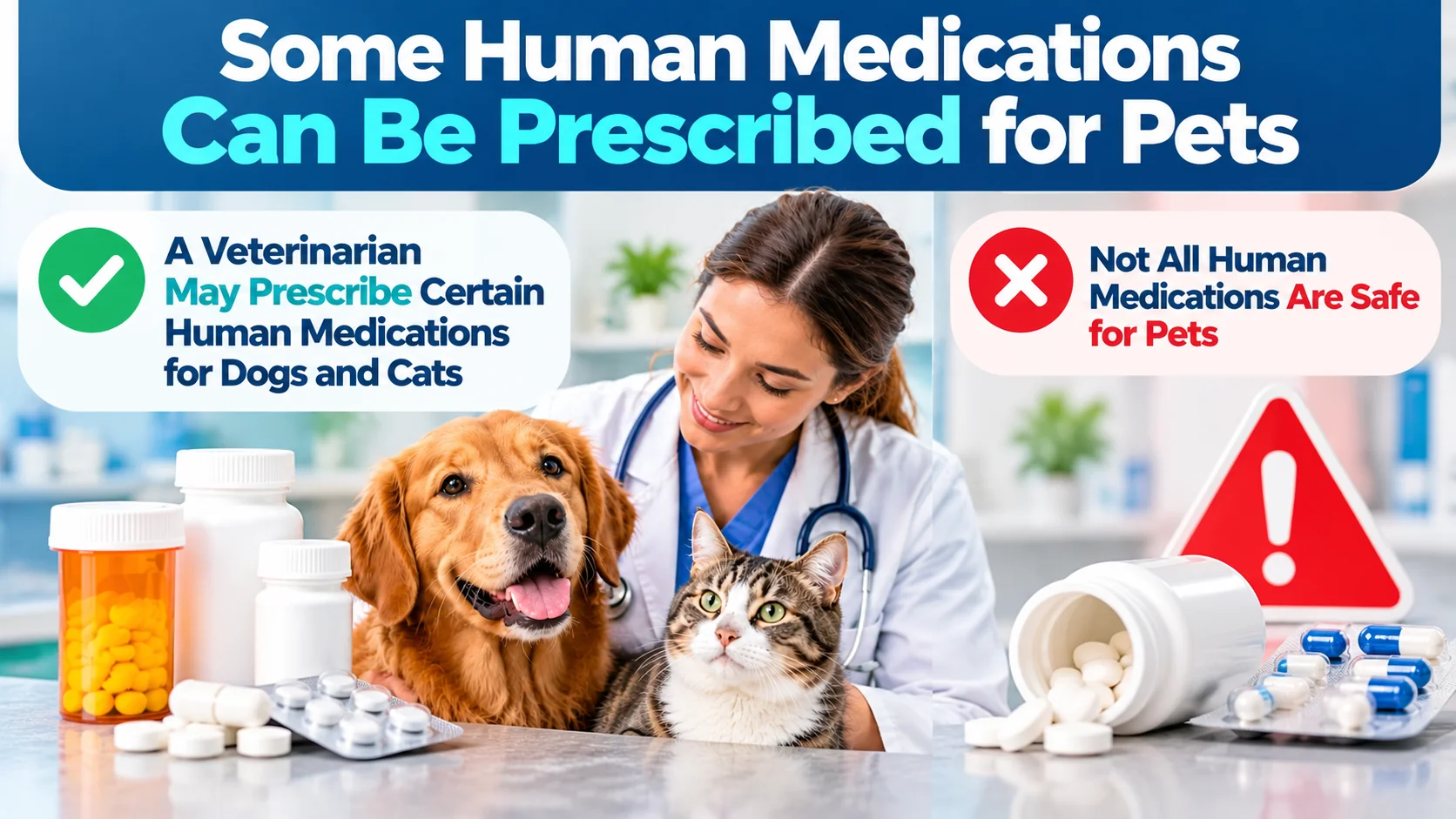
When Can a Veterinarian Prescribe a Human Medication?
The U.S. Food and Drug Administration (FDA) calls using an approved drug in a way that differs from its approved labeling extra-label use. For example, a veterinarian may prescribe a drug approved for human use to treat a dog or cat when the applicable legal and clinical conditions are satisfied.
The Animal Medicinal Drug Use Clarification Act (AMDUCA) and FDA regulations at 21 CFR Part 530 allow certain extra-label uses of approved human and animal drugs. Such use must be on the lawful order of a licensed veterinarian within a valid veterinarian-client-patient relationship (VCPR), and other restrictions apply. This is not a general permission for pet owners to choose human medications themselves.
Veterinary prescribing also involves applicable state professional rules. If your pet needs a prescription, the veterinarian should determine whether the drug and its formulation are appropriate for that specific animal.
Why Might a Veterinarian Choose a Human-Approved Drug?
Veterinarians have to choose treatments based on the individual animal and available therapeutic options. Sometimes an appropriate animal-labeled product is unavailable for the intended use or is not clinically effective for that patient. Under the FDA’s extra-label framework, a veterinarian may consider an approved human drug when the relevant conditions are met.
The fact that a medication is sold at a human pharmacy does not mean it was prescribed for a person. The prescription may identify your dog or cat as the patient and provide veterinary-specific directions.
Why Human Medications Can Be Risky for Dogs and Cats
Dogs, cats, and humans can process drugs differently. A drug’s safety depends on much more than its name.
- Species: A medicine that may be used in a dog may be dangerous for a cat, and vice versa.
- Strength and formulation: Human tablets, liquids, and combination products may contain strengths or ingredients that are inappropriate for an animal.
- Medical history: Age, health conditions, and other medicines can change the risk of side effects or interactions.
- Directions: A human package label does not provide the correct veterinary instructions for your pet.
Human pain relievers are a particularly important warning. The FDA cautions against giving pets medicines such as ibuprofen or naproxen without veterinary direction; acetaminophen can be fatal to cats. Never use a medicine from your own cabinet to treat an animal’s pain unless a veterinarian has specifically directed you to do so.
Five Questions to Ask Before Giving a Prescribed Human Medication to Your Pet
- What is this medicine treating? Ask the veterinarian what condition or symptom it is intended to address.
- Is this exact product appropriate for my dog or cat? Confirm the formulation and strength—not just the medication name.
- What instructions should I follow? Review the veterinarian’s directions and what to do if a dose is missed. Do not improvise.
- What side effects or warning signs should I watch for? Ask when to contact the veterinarian and when emergency care is needed.
- Does it interact with anything my pet already takes? Share a complete list of prescriptions, nonprescription products, and supplements.
If the label, instructions, or product looks different from what the veterinarian discussed, ask the veterinarian or dispensing pharmacist to clarify before administering it.
Can a Community Pharmacy Fill This Type of Veterinary Prescription?
In some cases, yes. A community pharmacy may be able to fill a lawful veterinary prescription for a human-approved medication, depending on the medication, prescription requirements, and pharmacy availability. The FDA notes that veterinary prescriptions for human drugs can be filled at human pharmacies.
When contacting a pharmacy, have the veterinarian’s prescription information available and explain that the patient is a dog or cat. The pharmacy may need to verify details with the prescriber. Do not assume every medication or formulation is stocked.
For a fuller explanation of how this works, read Can a Regular Pharmacy Fill a Pet Prescription From Your Veterinarian?. If you are wondering whether a product can be purchased without veterinary authorization, see Can You Buy Pet Medication Without a Veterinarian’s Prescription?.
Learn more about ABC Drugs’ Pet Prescriptions service.
What If Your Pet Received the Wrong Medicine?
If your pet may have swallowed a human medicine that was not prescribed for them, received the wrong product, or received an incorrect amount, contact your veterinarian or an emergency veterinary service immediately. Do not wait for symptoms to appear, and do not induce vomiting or give a home remedy unless a veterinary professional instructs you to do so.
Keep the package or prescription label available so the veterinary team can identify what was taken. If you suspect a dispensing or labeling error, tell the veterinarian and pharmacy promptly so they can investigate and help prevent further doses.
Frequently Asked Questions
Is it legal for a veterinarian to prescribe a human medication to a dog or cat?
Yes, in certain circumstances. FDA rules permit licensed veterinarians to prescribe certain approved human drugs for extra-label use in animals when applicable conditions are met, including a valid veterinarian-client-patient relationship.
Does a human medication need a different dose for a pet?
It may. Appropriate treatment depends on the species, the individual animal, the drug, and the formulation. Only follow the specific directions from your veterinarian; never calculate or adapt a human dose yourself.
Can I give my dog or cat medicine that was prescribed to me?
No—not on your own. A human prescription does not authorize treatment of an animal. Ask your veterinarian to evaluate the pet and prescribe an appropriate treatment if needed.
Can a human pharmacy dispense a prescription written for my cat or dog?
Sometimes. A community pharmacy may dispense an appropriate, lawful veterinary prescription if it can supply the prescribed product and meet applicable requirements. Call the pharmacy to confirm availability and prescription details.
Are over-the-counter human pain medicines safe for pets?
Do not assume so. Common human pain medicines can cause serious harm to dogs and cats, and acetaminophen can be fatal to cats. Ask your veterinarian about safe treatment options.
Questions About a Veterinary Prescription in Harlem?
ABC Drugs is a neighborhood pharmacy at 2095 Madison Avenue, New York, NY 10037. If your veterinarian prescribed a medication for your dog or cat, our pharmacy team can discuss prescription-filling questions and check whether the prescribed product is available. Your veterinarian remains the appropriate professional for diagnosis and treatment decisions.
Explore our Pet Prescriptions service or call (212) 491-2501.
Sources & References
- U.S. Food and Drug Administration. Frequently Asked Questions About Animal Drugs.
- U.S. Food and Drug Administration. Animal Medicinal Drug Use Clarification Act of 1994 (AMDUCA).
- U.S. Food and Drug Administration. Veterinary Medication Errors.
- U.S. Food and Drug Administration. Get the Facts About Pain Relievers for Pets.