For a non-controlled prescription in New York, your remaining authorized refills transfer with the prescription. The prescription must move in full; the pharmacy cannot transfer just one refill while leaving the others behind.
The transfer carries existing authorization to the receiving pharmacy. It does not create additional refills. Controlled-substance prescriptions have separate requirements.
Key Takeaways
- Remaining authorized refills accompany a transferred non-controlled prescription in New York.
- The receiving pharmacy records the valid refills remaining.
- The original prescription is invalidated at the transferring pharmacy.
- A refill authorization does not automatically mean medicine is ready to collect.
Do Your Remaining Refills Transfer With Your Prescription?
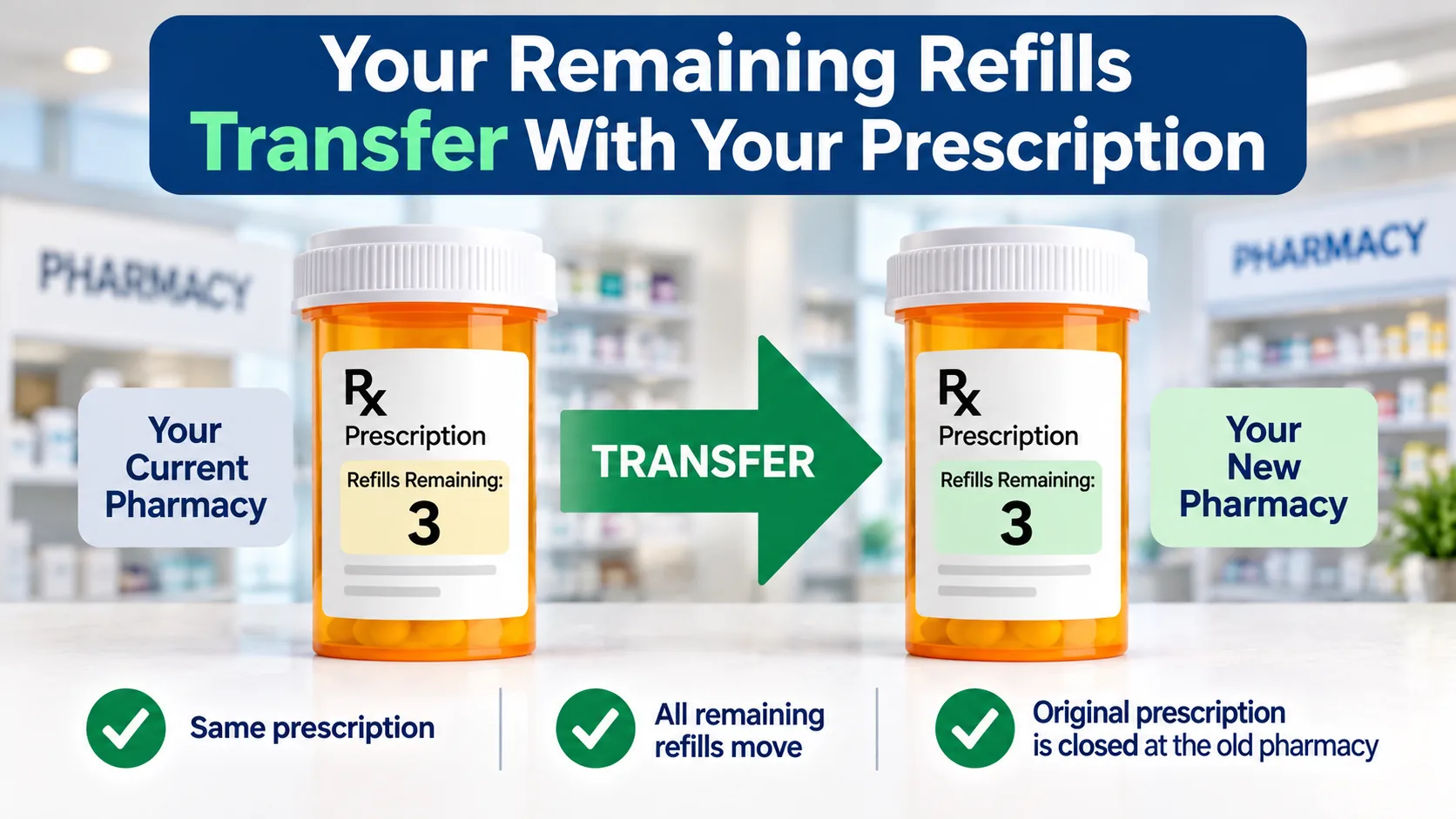
For a non-controlled prescription in New York, the remaining authorized refills accompany the prescription when it transfers. The receiving pharmacist records the original refill authorization and the number of valid refills remaining.
A Simple Example
If an eligible non-controlled prescription has three valid refills immediately before transfer, those three refills are included in the transferred information. The transfer does not create an additional refill.
Can You Transfer Just One Refill and Leave the Others Behind?
Not under current New York rules for non-controlled prescriptions. NYSED states that these prescriptions must transfer in full, including remaining authorized refills.
October 7, 2025 was the effective date of this change. Advice describing one-refill-at-a-time transfers may reflect New York’s older approach.
What Happens to the Prescription at Your Old Pharmacy?
The transferring pharmacist invalidates the original non-controlled prescription as of the transfer date and documents where it went. The receiving pharmacy maintains the transferred prescription record.
The original pharmacy retains required records, but the transfer does not leave the same prescription active for refilling at both locations.
Does Transferring a Prescription Count as Filling It?
Moving the prescription record and dispensing medicine are separate actions. Ask whether the receiving pharmacy has completed only the transfer or has also processed a fill.
If the refill count looks unexpected, ask the pharmacist to compare the transfer information with any dispensing completed afterward.
What if You Have No Refills Remaining?
There are no remaining refill authorizations to carry over if none remain. Switching pharmacies does not itself authorize another refill.
Ask whether a renewal or new prescription is needed. Your prescriber determines whether further treatment can be authorized. Having no refills is not, by itself, an instruction to stop treatment.
Are Controlled-Substance Prescriptions Different?
Yes. Controlled prescriptions have additional state and federal requirements. New York’s current guidance permits transfers subject to its controlled-substance requirements.
Do not apply the non-controlled prescription explanation automatically to a controlled medicine. Ask the pharmacist to assess that prescription’s eligibility and any refill authorization.
Questions to Ask Your New Pharmacy
- How many valid refills were received?
- Has a fill been processed since the transfer?
- Is further prescriber authorization needed?
- Is the medicine ready, or is another step pending?
For help starting an eligible transfer, see ABC Drugs’ Prescription Transfer service.
Frequently Asked Questions
Can I still refill the transferred prescription at my old pharmacy?
The original non-controlled prescription is invalidated when transferred. If you want to use the old pharmacy again, ask what transfer or new-prescription steps are needed.
Can I transfer my prescription back to the original pharmacy?
Ask the pharmacy to assess the prescription’s current eligibility. A further transfer may be possible, but controlled prescriptions and other circumstances can have additional restrictions. Do not assume the old record can simply be reactivated.
Why does the new pharmacy show fewer refills than I expected?
Ask the pharmacist to reconcile the valid refills received with any dispensing completed afterward. An older bottle label may not describe the current record.
Can I use a remaining refill immediately after transferring?
Not necessarily. An authorized refill does not by itself establish that the prescription is currently due or ready to be dispensed. Confirm its status with the receiving pharmacy.
Does transferring one prescription move all my other prescriptions?
No. Transferring a non-controlled prescription in full concerns that prescription and its authorized refills. Tell the pharmacy which other prescriptions you want assessed for transfer.
Does a transfer add more refills to my prescription?
No. It moves existing prescription information, including valid remaining authorization. Additional refills require appropriate prescriber authorization.
Do I need to call my prescriber just to move existing refills?
Not necessarily for an eligible transfer. Prescriber involvement may be needed if authorization has run out or the prescription requires clarification or another step.
Can my old bottle label be used to transfer the prescription?
The label can help the new pharmacy identify the prescription and the pharmacy holding it. It does not replace the required exchange of prescription information between authorized pharmacy professionals.
Can my caregiver request the transfer for me?
New York permits an authorized representative to expressly request and approve a transfer. The pharmacy can explain what it needs to confirm that person’s authority.
What should I do if I am running low while the transfer is pending?
Contact the receiving pharmacy promptly and explain your remaining supply. Ask what is still pending and whether prescriber involvement is needed. Do not change your dosing to stretch the supply without professional guidance.
Sources & References
This article uses New York pharmacy guidance and regulations. Transfer eligibility depends on the individual prescription and applicable requirements.
- New York State Education Department — Prescription RefillsWhole-prescription transfers, remaining refills, patient authorization, and separate controlled-substance requirements.
- New York State Education Department — Transfer of PrescriptionsInvalidation at the original pharmacy and transfer documentation.
- New York State Education Department — Part 63, Section 63.6(a)(8): Prescription TransfersOriginal and remaining refill information recorded by the receiving pharmacist and direct exchange of prescription information.